Acarospora Schleicheri (Ach.) A. Massal.
Commonly known as
Schleicher's Cracked Lichen
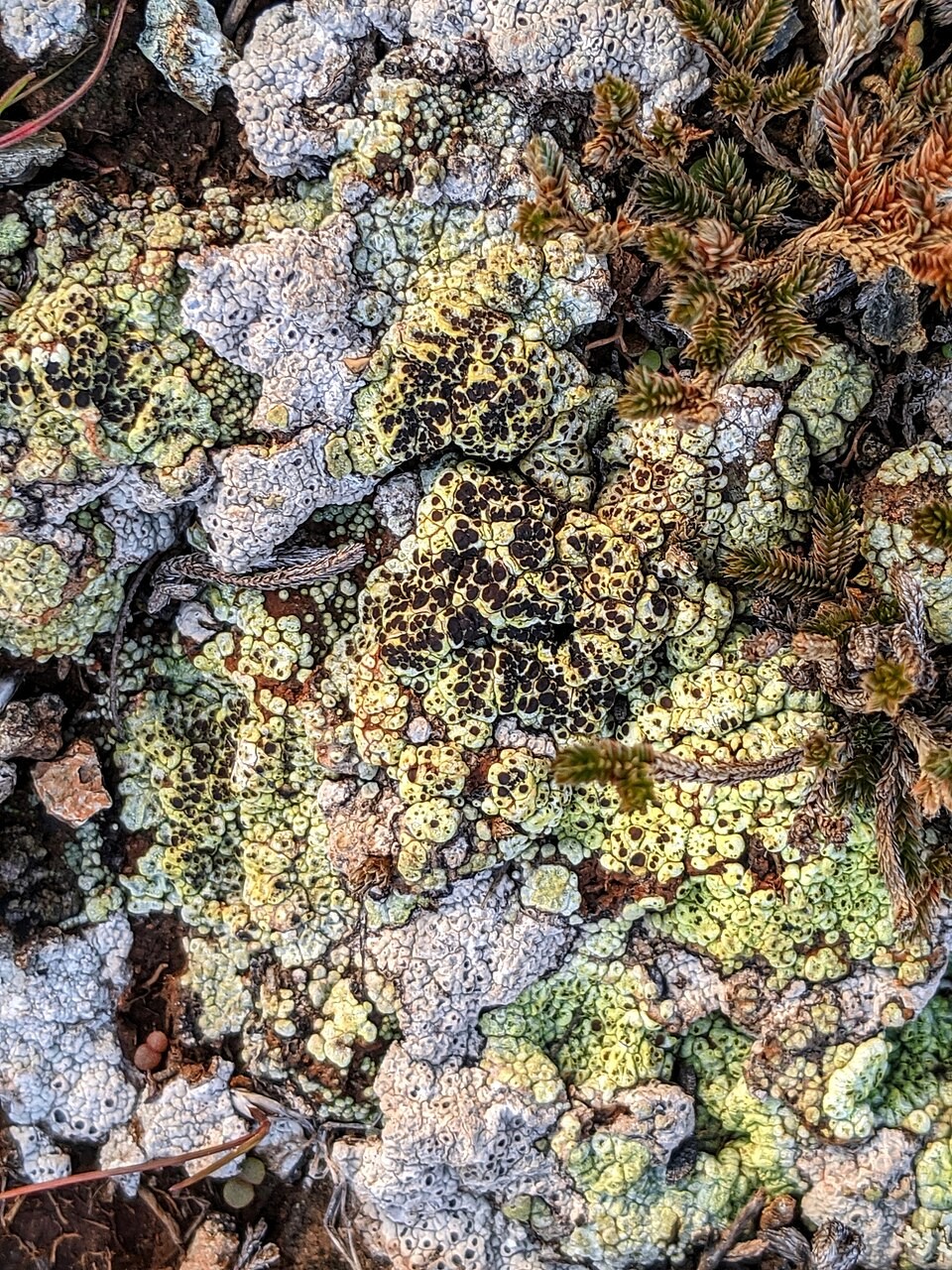
Acarospora Schleicheri (Ach.) A. Massal., commonly known as Schleicher's Cracked Lichen, is a soil-dwelling crustose lichen in the Acarosporaceae family. Native to arid and semi-arid regions, this vibrant yellow lichen forms distinctive cracked, tile-like patches on stable desert soils and is a key component of biological soil crusts.
Acarospora Schleicheri (Ach.) A. Massal.
Commonly known as
Schleicher's Cracked Lichen
Acarospora Schleicheri (Ach.) A. Massal., commonly known as Schleicher's Cracked Lichen, is a soil-dwelling crustose lichen in the Acarosporaceae family. Native to arid and semi-arid regions, this vibrant yellow lichen forms distinctive cracked, tile-like patches on stable desert soils and is a key component of biological soil crusts.
Acarospora Schleicheri (Ach.) A. Massal.
Commonly known as
Schleicher's Cracked Lichen
Acarospora Schleicheri (Ach.) A. Massal., commonly known as Schleicher's Cracked Lichen, is a soil-dwelling crustose lichen in the Acarosporaceae family. Native to arid and semi-arid regions, this vibrant yellow lichen forms distinctive cracked, tile-like patches on stable desert soils and is a key component of biological soil crusts.
Acarospora Schleicheri (Ach.) A. Massal.
Commonly known as
Schleicher's Cracked Lichen
Acarospora Schleicheri (Ach.) A. Massal., commonly known as Schleicher's Cracked Lichen, is a soil-dwelling crustose lichen in the Acarosporaceae family. Native to arid and semi-arid regions, this vibrant yellow lichen forms distinctive cracked, tile-like patches on stable desert soils and is a key component of biological soil crusts.
Acarospora Schleicheri (Ach.) A. Massal.
Commonly known as
Schleicher's Cracked Lichen
Acarospora Schleicheri (Ach.) A. Massal., commonly known as Schleicher's Cracked Lichen, is a soil-dwelling crustose lichen in the Acarosporaceae family. Native to arid and semi-arid regions, this vibrant yellow lichen forms distinctive cracked, tile-like patches on stable desert soils and is a key component of biological soil crusts.
Acarospora Schleicheri (Ach.) A. Massal.
Commonly known as
Schleicher's Cracked Lichen
Acarospora Schleicheri (Ach.) A. Massal., commonly known as Schleicher's Cracked Lichen, is a soil-dwelling crustose lichen in the Acarosporaceae family. Native to arid and semi-arid regions, this vibrant yellow lichen forms distinctive cracked, tile-like patches on stable desert soils and is a key component of biological soil crusts.
Acarospora Schleicheri (Ach.) A. Massal.
Commonly known as
Schleicher's Cracked Lichen
Acarospora Schleicheri (Ach.) A. Massal., commonly known as Schleicher's Cracked Lichen, is a soil-dwelling crustose lichen in the Acarosporaceae family. Native to arid and semi-arid regions, this vibrant yellow lichen forms distinctive cracked, tile-like patches on stable desert soils and is a key component of biological soil crusts.
Identification & Classification
Color & Surface
Vibrant "highlighter yellow" scales. They turn greenish when wet because the yellow skin becomes see-through, revealing the green algae inside.
Shape & Form
A scaly "crust" made of tiny, flat tiles. It grows in irregular patches that look like cracked paint or a tiled floor on the ground.
Fruiting
Small, sunken black or reddish dots in the center of the scales. These act like "launch pads" to release the lichen's spores.
Growth Habitat & Substrate
Strictly soil-dwelling in dry areas. It grows on dirt or among mosses. Pro tip: if it's on a bare rock, it's a different species.
Taxonomy Classification
Kingdom
Fungi
Division
Ascomycota
Class
Ascomycetes
Order
Lecanorales
Family
Acarosporaceae Zahlbr.
Genus
Acarospora A. Massal.
Species
Acarospora Schleicheri (Ach.) A. Massal.
Identification & Classification
Color & Surface
Vibrant "highlighter yellow" scales. They turn greenish when wet because the yellow skin becomes see-through, revealing the green algae inside.
Shape & Form
A scaly "crust" made of tiny, flat tiles. It grows in irregular patches that look like cracked paint or a tiled floor on the ground.
Fruiting
Small, sunken black or reddish dots in the center of the scales. These act like "launch pads" to release the lichen's spores.
Growth Habitat & Substrate
Strictly soil-dwelling in dry areas. It grows on dirt or among mosses. Pro tip: if it's on a bare rock, it's a different species.
Taxonomy Classification
Kingdom
Fungi
Division
Ascomycota
Class
Ascomycetes
Order
Lecanorales
Family
Acarosporaceae Zahlbr.
Genus
Acarospora A. Massal.
Species
Acarospora Schleicheri (Ach.) A. Massal.
Identification & Classification
Color & Surface
Vibrant "highlighter yellow" scales. They turn greenish when wet because the yellow skin becomes see-through, revealing the green algae inside.
Shape & Form
A scaly "crust" made of tiny, flat tiles. It grows in irregular patches that look like cracked paint or a tiled floor on the ground.
Fruiting
Small, sunken black or reddish dots in the center of the scales. These act like "launch pads" to release the lichen's spores.
Growth Habitat & Substrate
Strictly soil-dwelling in dry areas. It grows on dirt or among mosses. Pro tip: if it's on a bare rock, it's a different species.
Taxonomy Classification
Kingdom
Fungi
Division
Ascomycota
Class
Ascomycetes
Order
Lecanorales
Family
Acarosporaceae Zahlbr.
Genus
Acarospora A. Massal.
Species
Acarospora Schleicheri (Ach.) A. Massal.
Identification & Classification
Color & Surface
Vibrant "highlighter yellow" scales. They turn greenish when wet because the yellow skin becomes see-through, revealing the green algae inside.
Shape & Form
A scaly "crust" made of tiny, flat tiles. It grows in irregular patches that look like cracked paint or a tiled floor on the ground.
Fruiting
Small, sunken black or reddish dots in the center of the scales. These act like "launch pads" to release the lichen's spores.
Growth Habitat & Substrate
Strictly soil-dwelling in dry areas. It grows on dirt or among mosses. Pro tip: if it's on a bare rock, it's a different species.
Taxonomy Classification
Kingdom
Fungi
Division
Ascomycota
Class
Ascomycetes
Order
Lecanorales
Family
Acarosporaceae Zahlbr.
Genus
Acarospora A. Massal.
Species
Acarospora Schleicheri (Ach.) A. Massal.
Identification & Classification
Color & Surface
Vibrant "highlighter yellow" scales. They turn greenish when wet because the yellow skin becomes see-through, revealing the green algae inside.
Shape & Form
A scaly "crust" made of tiny, flat tiles. It grows in irregular patches that look like cracked paint or a tiled floor on the ground.
Fruiting
Small, sunken black or reddish dots in the center of the scales. These act like "launch pads" to release the lichen's spores.
Growth Habitat & Substrate
Strictly soil-dwelling in dry areas. It grows on dirt or among mosses. Pro tip: if it's on a bare rock, it's a different species.
Taxonomy Classification
Kingdom
Fungi
Division
Ascomycota
Class
Ascomycetes
Order
Lecanorales
Family
Acarosporaceae Zahlbr.
Genus
Acarospora A. Massal.
Species
Acarospora Schleicheri (Ach.) A. Massal.
Identification & Classification
Color & Surface
Vibrant "highlighter yellow" scales. They turn greenish when wet because the yellow skin becomes see-through, revealing the green algae inside.
Shape & Form
A scaly "crust" made of tiny, flat tiles. It grows in irregular patches that look like cracked paint or a tiled floor on the ground.
Fruiting
Small, sunken black or reddish dots in the center of the scales. These act like "launch pads" to release the lichen's spores.
Growth Habitat & Substrate
Strictly soil-dwelling in dry areas. It grows on dirt or among mosses. Pro tip: if it's on a bare rock, it's a different species.
Taxonomy Classification
Kingdom
Fungi
Division
Ascomycota
Class
Ascomycetes
Order
Lecanorales
Family
Acarosporaceae Zahlbr.
Genus
Acarospora A. Massal.
Species
Acarospora Schleicheri (Ach.) A. Massal.
Care Requirements
Sunlight
Needs 6+ hours of direct light. Its yellow "sunscreen" allows it to thrive in unshaded sites where intense UV rays would kill most other plants.
Temperature
Extremely heat-tolerant. It easily survives the high temperatures of desert summers and the freezing nights common in open, arid environments.
Nutrient
Needs no fertilizer. It creates its own energy from the sun. Adding extra nutrients can actually kill it or help weeds grow and smother it.
Soil
Strictly soil-dwelling. It needs stable, well-drained dirt or moss. It cannot survive on bare rock or in soggy mud where water pools for too long.
Maintenance
Requires zero trimming. However, it is extremely fragile; avoid stepping on it, as crushed soil crusts can take decades to grow back and recover.
Water
Built for long droughts. It stays dormant when dry, then "wakes up" with water. It needs dry air to avoid rotting from trapped moisture.
Care Requirements
Sunlight
Needs 6+ hours of direct light. Its yellow "sunscreen" allows it to thrive in unshaded sites where intense UV rays would kill most other plants.
Temperature
Extremely heat-tolerant. It easily survives the high temperatures of desert summers and the freezing nights common in open, arid environments.
Nutrient
Needs no fertilizer. It creates its own energy from the sun. Adding extra nutrients can actually kill it or help weeds grow and smother it.
Soil
Strictly soil-dwelling. It needs stable, well-drained dirt or moss. It cannot survive on bare rock or in soggy mud where water pools for too long.
Maintenance
Requires zero trimming. However, it is extremely fragile; avoid stepping on it, as crushed soil crusts can take decades to grow back and recover.
Water
Built for long droughts. It stays dormant when dry, then "wakes up" with water. It needs dry air to avoid rotting from trapped moisture.
Care Requirements
Sunlight
Needs 6+ hours of direct light. Its yellow "sunscreen" allows it to thrive in unshaded sites where intense UV rays would kill most other plants.
Temperature
Extremely heat-tolerant. It easily survives the high temperatures of desert summers and the freezing nights common in open, arid environments.
Nutrient
Needs no fertilizer. It creates its own energy from the sun. Adding extra nutrients can actually kill it or help weeds grow and smother it.
Soil
Strictly soil-dwelling. It needs stable, well-drained dirt or moss. It cannot survive on bare rock or in soggy mud where water pools for too long.
Maintenance
Requires zero trimming. However, it is extremely fragile; avoid stepping on it, as crushed soil crusts can take decades to grow back and recover.
Water
Built for long droughts. It stays dormant when dry, then "wakes up" with water. It needs dry air to avoid rotting from trapped moisture.
Care Requirements
Sunlight
Needs 6+ hours of direct light. Its yellow "sunscreen" allows it to thrive in unshaded sites where intense UV rays would kill most other plants.
Temperature
Extremely heat-tolerant. It easily survives the high temperatures of desert summers and the freezing nights common in open, arid environments.
Nutrient
Needs no fertilizer. It creates its own energy from the sun. Adding extra nutrients can actually kill it or help weeds grow and smother it.
Soil
Strictly soil-dwelling. It needs stable, well-drained dirt or moss. It cannot survive on bare rock or in soggy mud where water pools for too long.
Maintenance
Requires zero trimming. However, it is extremely fragile; avoid stepping on it, as crushed soil crusts can take decades to grow back and recover.
Water
Built for long droughts. It stays dormant when dry, then "wakes up" with water. It needs dry air to avoid rotting from trapped moisture.
Care Requirements
Sunlight
Needs 6+ hours of direct light. Its yellow "sunscreen" allows it to thrive in unshaded sites where intense UV rays would kill most other plants.
Temperature
Extremely heat-tolerant. It easily survives the high temperatures of desert summers and the freezing nights common in open, arid environments.
Nutrient
Needs no fertilizer. It creates its own energy from the sun. Adding extra nutrients can actually kill it or help weeds grow and smother it.
Soil
Strictly soil-dwelling. It needs stable, well-drained dirt or moss. It cannot survive on bare rock or in soggy mud where water pools for too long.
Maintenance
Requires zero trimming. However, it is extremely fragile; avoid stepping on it, as crushed soil crusts can take decades to grow back and recover.
Water
Built for long droughts. It stays dormant when dry, then "wakes up" with water. It needs dry air to avoid rotting from trapped moisture.
Care Requirements
Sunlight
Needs 6+ hours of direct light. Its yellow "sunscreen" allows it to thrive in unshaded sites where intense UV rays would kill most other plants.
Temperature
Extremely heat-tolerant. It easily survives the high temperatures of desert summers and the freezing nights common in open, arid environments.
Nutrient
Needs no fertilizer. It creates its own energy from the sun. Adding extra nutrients can actually kill it or help weeds grow and smother it.
Soil
Strictly soil-dwelling. It needs stable, well-drained dirt or moss. It cannot survive on bare rock or in soggy mud where water pools for too long.
Maintenance
Requires zero trimming. However, it is extremely fragile; avoid stepping on it, as crushed soil crusts can take decades to grow back and recover.
Water
Built for long droughts. It stays dormant when dry, then "wakes up" with water. It needs dry air to avoid rotting from trapped moisture.
Seasonal Behavior
Spring
This is the peak active phase. Increased moisture from spring rains "wakes up" the lichen, causing it to turn greenish and expand its patches across the soil.

Autumn
As temperatures drop, the lichen may become active again with the return of cool dews. This is a secondary growth period before the freezing temperatures of winter arrive.

Winter
Growth slows significantly during cold freezes. While it can handle snow cover, the lichen remains largely inactive and brittle until the ground thaws and the spring sun returns.

Summer
The lichen enters dormancy to survive intense heat. It turns a vibrant, powdery yellow to reflect sunlight and stop water loss, essentially "sleeping" until the heat breaks.

Seasonal Behavior
Spring
This is the peak active phase. Increased moisture from spring rains "wakes up" the lichen, causing it to turn greenish and expand its patches across the soil.
Autumn
As temperatures drop, the lichen may become active again with the return of cool dews. This is a secondary growth period before the freezing temperatures of winter arrive.
Winter
Growth slows significantly during cold freezes. While it can handle snow cover, the lichen remains largely inactive and brittle until the ground thaws and the spring sun returns.
Summer
The lichen enters dormancy to survive intense heat. It turns a vibrant, powdery yellow to reflect sunlight and stop water loss, essentially "sleeping" until the heat breaks.
Seasonal Behavior
Spring
This is the peak active phase. Increased moisture from spring rains "wakes up" the lichen, causing it to turn greenish and expand its patches across the soil.
Autumn
As temperatures drop, the lichen may become active again with the return of cool dews. This is a secondary growth period before the freezing temperatures of winter arrive.
Winter
Growth slows significantly during cold freezes. While it can handle snow cover, the lichen remains largely inactive and brittle until the ground thaws and the spring sun returns.
Summer
The lichen enters dormancy to survive intense heat. It turns a vibrant, powdery yellow to reflect sunlight and stop water loss, essentially "sleeping" until the heat breaks.
Seasonal Behavior
Spring
This is the peak active phase. Increased moisture from spring rains "wakes up" the lichen, causing it to turn greenish and expand its patches across the soil.
Autumn
As temperatures drop, the lichen may become active again with the return of cool dews. This is a secondary growth period before the freezing temperatures of winter arrive.
Winter
Growth slows significantly during cold freezes. While it can handle snow cover, the lichen remains largely inactive and brittle until the ground thaws and the spring sun returns.
Summer
The lichen enters dormancy to survive intense heat. It turns a vibrant, powdery yellow to reflect sunlight and stop water loss, essentially "sleeping" until the heat breaks.
Seasonal Behavior
Spring
This is the peak active phase. Increased moisture from spring rains "wakes up" the lichen, causing it to turn greenish and expand its patches across the soil.
Autumn
As temperatures drop, the lichen may become active again with the return of cool dews. This is a secondary growth period before the freezing temperatures of winter arrive.
Winter
Growth slows significantly during cold freezes. While it can handle snow cover, the lichen remains largely inactive and brittle until the ground thaws and the spring sun returns.
Summer
The lichen enters dormancy to survive intense heat. It turns a vibrant, powdery yellow to reflect sunlight and stop water loss, essentially "sleeping" until the heat breaks.