Actinidia Lindl.
Commonly known as
Actinidia
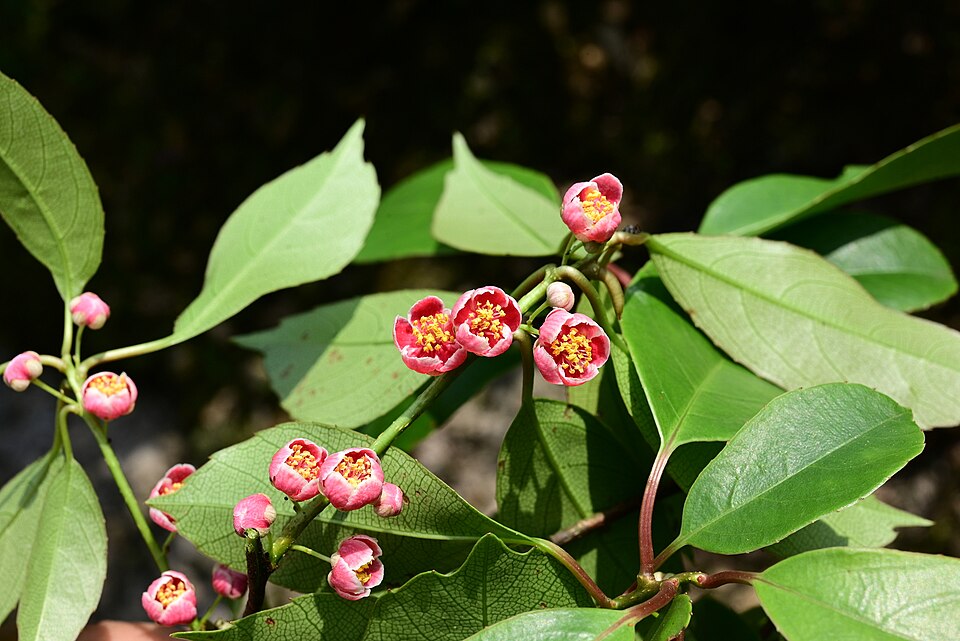
Actinidia Lindl. is a genus of woody climbing vines in the Actinidiaceae family, native to temperate regions of East Asia. Best known as the source of kiwifruit, these vigorous climbers feature heart-shaped leaves, fragrant white flowers, and delicious, vitamin-rich fruits. They are widely cultivated for commercial fruit production and ornamental use.
Actinidia Lindl.
Commonly known as
Actinidia
Actinidia Lindl. is a genus of woody climbing vines in the Actinidiaceae family, native to temperate regions of East Asia. Best known as the source of kiwifruit, these vigorous climbers feature heart-shaped leaves, fragrant white flowers, and delicious, vitamin-rich fruits. They are widely cultivated for commercial fruit production and ornamental use.
Actinidia Lindl.
Commonly known as
Actinidia
Actinidia Lindl. is a genus of woody climbing vines in the Actinidiaceae family, native to temperate regions of East Asia. Best known as the source of kiwifruit, these vigorous climbers feature heart-shaped leaves, fragrant white flowers, and delicious, vitamin-rich fruits. They are widely cultivated for commercial fruit production and ornamental use.
Actinidia Lindl.
Commonly known as
Actinidia
Actinidia Lindl. is a genus of woody climbing vines in the Actinidiaceae family, native to temperate regions of East Asia. Best known as the source of kiwifruit, these vigorous climbers feature heart-shaped leaves, fragrant white flowers, and delicious, vitamin-rich fruits. They are widely cultivated for commercial fruit production and ornamental use.
Actinidia Lindl.
Commonly known as
Actinidia
Actinidia Lindl. is a genus of woody climbing vines in the Actinidiaceae family, native to temperate regions of East Asia. Best known as the source of kiwifruit, these vigorous climbers feature heart-shaped leaves, fragrant white flowers, and delicious, vitamin-rich fruits. They are widely cultivated for commercial fruit production and ornamental use.
Actinidia Lindl.
Commonly known as
Actinidia
Actinidia Lindl. is a genus of woody climbing vines in the Actinidiaceae family, native to temperate regions of East Asia. Best known as the source of kiwifruit, these vigorous climbers feature heart-shaped leaves, fragrant white flowers, and delicious, vitamin-rich fruits. They are widely cultivated for commercial fruit production and ornamental use.
Actinidia Lindl.
Commonly known as
Actinidia
Actinidia Lindl. is a genus of woody climbing vines in the Actinidiaceae family, native to temperate regions of East Asia. Best known as the source of kiwifruit, these vigorous climbers feature heart-shaped leaves, fragrant white flowers, and delicious, vitamin-rich fruits. They are widely cultivated for commercial fruit production and ornamental use.
Identification & Classification
Color & Surface
Vibrant "highlighter yellow" scales. They turn greenish when wet because the yellow skin becomes see-through, revealing the green algae inside.
Shape & Form
A scaly "crust" made of tiny, flat tiles. It grows in irregular patches that look like cracked paint or a tiled floor on the ground.
Fruiting
Small, sunken black or reddish dots in the center of the scales. These act like "launch pads" to release the lichen's spores.
Growth Habitat & Substrate
Strictly soil-dwelling in dry areas. It grows on dirt or among mosses. Pro tip: if it's on a bare rock, it's a different species.
Taxonomy Classification
Kingdom
Plantae
Division
Magnoliophyta
Class
Magnoliopsida
Order
Theales
Family
Actinidiaceae Engl. & Gilg
Genus
Actinidia Lindl.
Identification & Classification
Color & Surface
Vibrant "highlighter yellow" scales. They turn greenish when wet because the yellow skin becomes see-through, revealing the green algae inside.
Shape & Form
A scaly "crust" made of tiny, flat tiles. It grows in irregular patches that look like cracked paint or a tiled floor on the ground.
Fruiting
Small, sunken black or reddish dots in the center of the scales. These act like "launch pads" to release the lichen's spores.
Growth Habitat & Substrate
Strictly soil-dwelling in dry areas. It grows on dirt or among mosses. Pro tip: if it's on a bare rock, it's a different species.
Taxonomy Classification
Kingdom
Plantae
Division
Magnoliophyta
Class
Magnoliopsida
Order
Theales
Family
Actinidiaceae Engl. & Gilg
Genus
Actinidia Lindl.
Identification & Classification
Color & Surface
Vibrant "highlighter yellow" scales. They turn greenish when wet because the yellow skin becomes see-through, revealing the green algae inside.
Shape & Form
A scaly "crust" made of tiny, flat tiles. It grows in irregular patches that look like cracked paint or a tiled floor on the ground.
Fruiting
Small, sunken black or reddish dots in the center of the scales. These act like "launch pads" to release the lichen's spores.
Growth Habitat & Substrate
Strictly soil-dwelling in dry areas. It grows on dirt or among mosses. Pro tip: if it's on a bare rock, it's a different species.
Taxonomy Classification
Kingdom
Plantae
Division
Magnoliophyta
Class
Magnoliopsida
Order
Theales
Family
Actinidiaceae Engl. & Gilg
Genus
Actinidia Lindl.
Identification & Classification
Color & Surface
Vibrant "highlighter yellow" scales. They turn greenish when wet because the yellow skin becomes see-through, revealing the green algae inside.
Shape & Form
A scaly "crust" made of tiny, flat tiles. It grows in irregular patches that look like cracked paint or a tiled floor on the ground.
Fruiting
Small, sunken black or reddish dots in the center of the scales. These act like "launch pads" to release the lichen's spores.
Growth Habitat & Substrate
Strictly soil-dwelling in dry areas. It grows on dirt or among mosses. Pro tip: if it's on a bare rock, it's a different species.
Taxonomy Classification
Kingdom
Plantae
Division
Magnoliophyta
Class
Magnoliopsida
Order
Theales
Family
Actinidiaceae Engl. & Gilg
Genus
Actinidia Lindl.
Identification & Classification
Color & Surface
Vibrant "highlighter yellow" scales. They turn greenish when wet because the yellow skin becomes see-through, revealing the green algae inside.
Shape & Form
A scaly "crust" made of tiny, flat tiles. It grows in irregular patches that look like cracked paint or a tiled floor on the ground.
Fruiting
Small, sunken black or reddish dots in the center of the scales. These act like "launch pads" to release the lichen's spores.
Growth Habitat & Substrate
Strictly soil-dwelling in dry areas. It grows on dirt or among mosses. Pro tip: if it's on a bare rock, it's a different species.
Taxonomy Classification
Kingdom
Plantae
Division
Magnoliophyta
Class
Magnoliopsida
Order
Theales
Family
Actinidiaceae Engl. & Gilg
Genus
Actinidia Lindl.
Identification & Classification
Color & Surface
Vibrant "highlighter yellow" scales. They turn greenish when wet because the yellow skin becomes see-through, revealing the green algae inside.
Shape & Form
A scaly "crust" made of tiny, flat tiles. It grows in irregular patches that look like cracked paint or a tiled floor on the ground.
Fruiting
Small, sunken black or reddish dots in the center of the scales. These act like "launch pads" to release the lichen's spores.
Growth Habitat & Substrate
Strictly soil-dwelling in dry areas. It grows on dirt or among mosses. Pro tip: if it's on a bare rock, it's a different species.
Taxonomy Classification
Kingdom
Plantae
Division
Magnoliophyta
Class
Magnoliopsida
Order
Theales
Family
Actinidiaceae Engl. & Gilg
Genus
Actinidia Lindl.
Care Requirements
Sunlight
Thrives in full sun to partial shade, requiring at least 6 hours of direct sunlight for optimal flowering and fruit production.
Temperature
Grows best in temperate climates with temperatures between 10–25°C. Tolerates winter cold but is sensitive to late spring frosts during flowering.
Nutrient
Benefits from balanced fertilizer in early spring and midsummer. Avoid excessive nitrogen, which promotes foliage at the expense of fruit.
Soil
Prefers deep, fertile, well-drained soil rich in organic matter. Slightly acidic to neutral pH is ideal; avoid heavy clay or waterlogged sites.
Maintenance
Requires regular pruning to control vigorous growth and improve fruit yield. Train onto sturdy trellises or pergolas; remove dead or tangled growth.
Water
Requires regular, consistent watering and good drainage. Keep soil evenly moist, especially during fruit development; avoid waterlogging.
Care Requirements
Sunlight
Thrives in full sun to partial shade, requiring at least 6 hours of direct sunlight for optimal flowering and fruit production.
Temperature
Grows best in temperate climates with temperatures between 10–25°C. Tolerates winter cold but is sensitive to late spring frosts during flowering.
Nutrient
Benefits from balanced fertilizer in early spring and midsummer. Avoid excessive nitrogen, which promotes foliage at the expense of fruit.
Soil
Prefers deep, fertile, well-drained soil rich in organic matter. Slightly acidic to neutral pH is ideal; avoid heavy clay or waterlogged sites.
Maintenance
Requires regular pruning to control vigorous growth and improve fruit yield. Train onto sturdy trellises or pergolas; remove dead or tangled growth.
Water
Requires regular, consistent watering and good drainage. Keep soil evenly moist, especially during fruit development; avoid waterlogging.
Care Requirements
Sunlight
Thrives in full sun to partial shade, requiring at least 6 hours of direct sunlight for optimal flowering and fruit production.
Temperature
Grows best in temperate climates with temperatures between 10–25°C. Tolerates winter cold but is sensitive to late spring frosts during flowering.
Nutrient
Benefits from balanced fertilizer in early spring and midsummer. Avoid excessive nitrogen, which promotes foliage at the expense of fruit.
Soil
Prefers deep, fertile, well-drained soil rich in organic matter. Slightly acidic to neutral pH is ideal; avoid heavy clay or waterlogged sites.
Maintenance
Requires regular pruning to control vigorous growth and improve fruit yield. Train onto sturdy trellises or pergolas; remove dead or tangled growth.
Water
Requires regular, consistent watering and good drainage. Keep soil evenly moist, especially during fruit development; avoid waterlogging.
Care Requirements
Sunlight
Thrives in full sun to partial shade, requiring at least 6 hours of direct sunlight for optimal flowering and fruit production.
Temperature
Grows best in temperate climates with temperatures between 10–25°C. Tolerates winter cold but is sensitive to late spring frosts during flowering.
Nutrient
Benefits from balanced fertilizer in early spring and midsummer. Avoid excessive nitrogen, which promotes foliage at the expense of fruit.
Soil
Prefers deep, fertile, well-drained soil rich in organic matter. Slightly acidic to neutral pH is ideal; avoid heavy clay or waterlogged sites.
Maintenance
Requires regular pruning to control vigorous growth and improve fruit yield. Train onto sturdy trellises or pergolas; remove dead or tangled growth.
Water
Requires regular, consistent watering and good drainage. Keep soil evenly moist, especially during fruit development; avoid waterlogging.
Care Requirements
Sunlight
Thrives in full sun to partial shade, requiring at least 6 hours of direct sunlight for optimal flowering and fruit production.
Temperature
Grows best in temperate climates with temperatures between 10–25°C. Tolerates winter cold but is sensitive to late spring frosts during flowering.
Nutrient
Benefits from balanced fertilizer in early spring and midsummer. Avoid excessive nitrogen, which promotes foliage at the expense of fruit.
Soil
Prefers deep, fertile, well-drained soil rich in organic matter. Slightly acidic to neutral pH is ideal; avoid heavy clay or waterlogged sites.
Maintenance
Requires regular pruning to control vigorous growth and improve fruit yield. Train onto sturdy trellises or pergolas; remove dead or tangled growth.
Water
Requires regular, consistent watering and good drainage. Keep soil evenly moist, especially during fruit development; avoid waterlogging.
Care Requirements
Sunlight
Thrives in full sun to partial shade, requiring at least 6 hours of direct sunlight for optimal flowering and fruit production.
Temperature
Grows best in temperate climates with temperatures between 10–25°C. Tolerates winter cold but is sensitive to late spring frosts during flowering.
Nutrient
Benefits from balanced fertilizer in early spring and midsummer. Avoid excessive nitrogen, which promotes foliage at the expense of fruit.
Soil
Prefers deep, fertile, well-drained soil rich in organic matter. Slightly acidic to neutral pH is ideal; avoid heavy clay or waterlogged sites.
Maintenance
Requires regular pruning to control vigorous growth and improve fruit yield. Train onto sturdy trellises or pergolas; remove dead or tangled growth.
Water
Requires regular, consistent watering and good drainage. Keep soil evenly moist, especially during fruit development; avoid waterlogging.
Seasonal Behavior
Spring
Vigorous new growth emerges from dormant buds. Fragrant white to cream flowers appear in late spring, attracting pollinators.

Autumn
Fruits ripen and are harvested in mid to late autumn. Foliage may turn yellow before dropping as the vine prepares for dormancy.

Winter
Dormant in winter with bare, woody stems. Prune during late winter before new growth begins; protect roots from severe frost with mulch.

Summer
Rapid vegetative growth continues. Fruits develop and enlarge throughout summer, requiring consistent moisture and support.

Seasonal Behavior
Spring
Vigorous new growth emerges from dormant buds. Fragrant white to cream flowers appear in late spring, attracting pollinators.
Autumn
Fruits ripen and are harvested in mid to late autumn. Foliage may turn yellow before dropping as the vine prepares for dormancy.
Winter
Dormant in winter with bare, woody stems. Prune during late winter before new growth begins; protect roots from severe frost with mulch.
Summer
Rapid vegetative growth continues. Fruits develop and enlarge throughout summer, requiring consistent moisture and support.
Seasonal Behavior
Spring
Vigorous new growth emerges from dormant buds. Fragrant white to cream flowers appear in late spring, attracting pollinators.
Autumn
Fruits ripen and are harvested in mid to late autumn. Foliage may turn yellow before dropping as the vine prepares for dormancy.
Winter
Dormant in winter with bare, woody stems. Prune during late winter before new growth begins; protect roots from severe frost with mulch.
Summer
Rapid vegetative growth continues. Fruits develop and enlarge throughout summer, requiring consistent moisture and support.
Seasonal Behavior
Spring
Vigorous new growth emerges from dormant buds. Fragrant white to cream flowers appear in late spring, attracting pollinators.
Autumn
Fruits ripen and are harvested in mid to late autumn. Foliage may turn yellow before dropping as the vine prepares for dormancy.
Winter
Dormant in winter with bare, woody stems. Prune during late winter before new growth begins; protect roots from severe frost with mulch.
Summer
Rapid vegetative growth continues. Fruits develop and enlarge throughout summer, requiring consistent moisture and support.
Seasonal Behavior
Spring
Vigorous new growth emerges from dormant buds. Fragrant white to cream flowers appear in late spring, attracting pollinators.
Autumn
Fruits ripen and are harvested in mid to late autumn. Foliage may turn yellow before dropping as the vine prepares for dormancy.
Winter
Dormant in winter with bare, woody stems. Prune during late winter before new growth begins; protect roots from severe frost with mulch.
Summer
Rapid vegetative growth continues. Fruits develop and enlarge throughout summer, requiring consistent moisture and support.