Adoxa L.
Commonly known as
Adoxa
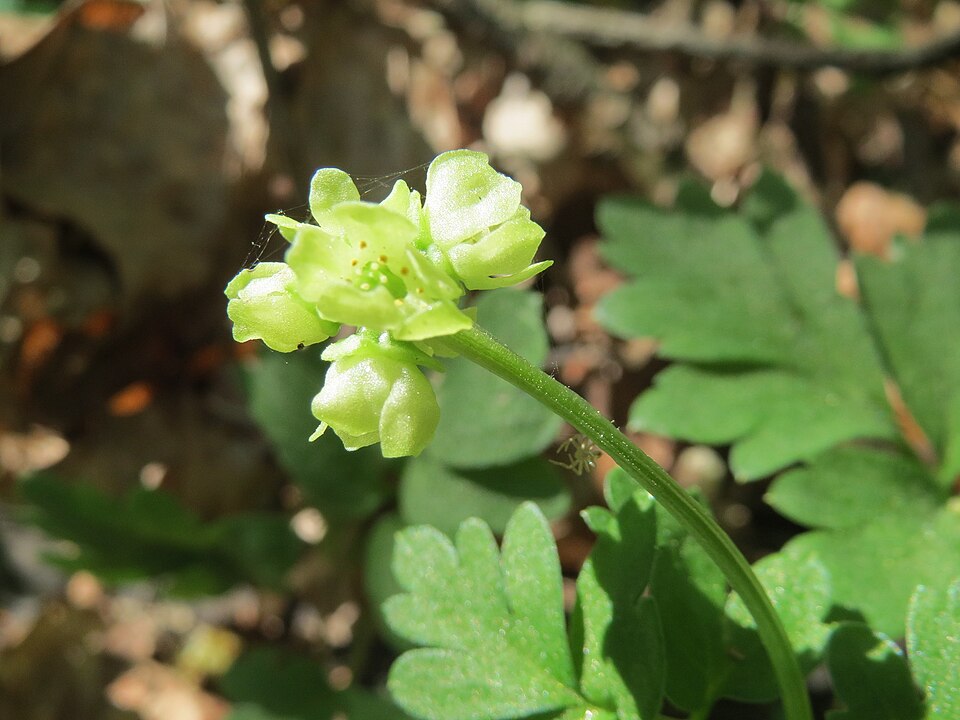
Adoxa L. is a small genus of delicate perennial herbs in the family Adoxaceae, commonly known as moschatel or muskroot. Distinguished by its unique cubic flower heads with five greenish-yellow flowers arranged on four sides and one on top, this spring-flowering woodland plant emerges in early spring and retreats underground by summer. Native to damp, shaded deciduous woodlands across temperate Europe, Asia, and North America, it spreads via creeping rhizomes and produces ternately divided basal leaves on stems reaching just 5–15 cm tall.
Adoxa L.
Commonly known as
Adoxa
Adoxa L. is a small genus of delicate perennial herbs in the family Adoxaceae, commonly known as moschatel or muskroot. Distinguished by its unique cubic flower heads with five greenish-yellow flowers arranged on four sides and one on top, this spring-flowering woodland plant emerges in early spring and retreats underground by summer. Native to damp, shaded deciduous woodlands across temperate Europe, Asia, and North America, it spreads via creeping rhizomes and produces ternately divided basal leaves on stems reaching just 5–15 cm tall.
Adoxa L.
Commonly known as
Adoxa
Adoxa L. is a small genus of delicate perennial herbs in the family Adoxaceae, commonly known as moschatel or muskroot. Distinguished by its unique cubic flower heads with five greenish-yellow flowers arranged on four sides and one on top, this spring-flowering woodland plant emerges in early spring and retreats underground by summer. Native to damp, shaded deciduous woodlands across temperate Europe, Asia, and North America, it spreads via creeping rhizomes and produces ternately divided basal leaves on stems reaching just 5–15 cm tall.
Adoxa L.
Commonly known as
Adoxa
Adoxa L. is a small genus of delicate perennial herbs in the family Adoxaceae, commonly known as moschatel or muskroot. Distinguished by its unique cubic flower heads with five greenish-yellow flowers arranged on four sides and one on top, this spring-flowering woodland plant emerges in early spring and retreats underground by summer. Native to damp, shaded deciduous woodlands across temperate Europe, Asia, and North America, it spreads via creeping rhizomes and produces ternately divided basal leaves on stems reaching just 5–15 cm tall.
Adoxa L.
Commonly known as
Adoxa
Adoxa L. is a small genus of delicate perennial herbs in the family Adoxaceae, commonly known as moschatel or muskroot. Distinguished by its unique cubic flower heads with five greenish-yellow flowers arranged on four sides and one on top, this spring-flowering woodland plant emerges in early spring and retreats underground by summer. Native to damp, shaded deciduous woodlands across temperate Europe, Asia, and North America, it spreads via creeping rhizomes and produces ternately divided basal leaves on stems reaching just 5–15 cm tall.
Adoxa L.
Commonly known as
Adoxa
Adoxa L. is a small genus of delicate perennial herbs in the family Adoxaceae, commonly known as moschatel or muskroot. Distinguished by its unique cubic flower heads with five greenish-yellow flowers arranged on four sides and one on top, this spring-flowering woodland plant emerges in early spring and retreats underground by summer. Native to damp, shaded deciduous woodlands across temperate Europe, Asia, and North America, it spreads via creeping rhizomes and produces ternately divided basal leaves on stems reaching just 5–15 cm tall.
Adoxa L.
Commonly known as
Adoxa
Adoxa L. is a small genus of delicate perennial herbs in the family Adoxaceae, commonly known as moschatel or muskroot. Distinguished by its unique cubic flower heads with five greenish-yellow flowers arranged on four sides and one on top, this spring-flowering woodland plant emerges in early spring and retreats underground by summer. Native to damp, shaded deciduous woodlands across temperate Europe, Asia, and North America, it spreads via creeping rhizomes and produces ternately divided basal leaves on stems reaching just 5–15 cm tall.
Identification & Classification
Color & Surface
Vibrant "highlighter yellow" scales. They turn greenish when wet because the yellow skin becomes see-through, revealing the green algae inside.
Shape & Form
A scaly "crust" made of tiny, flat tiles. It grows in irregular patches that look like cracked paint or a tiled floor on the ground.
Fruiting
Small, sunken black or reddish dots in the center of the scales. These act like "launch pads" to release the lichen's spores.
Growth Habitat & Substrate
Strictly soil-dwelling in dry areas. It grows on dirt or among mosses. Pro tip: if it's on a bare rock, it's a different species.
Taxonomy Classification
Kingdom
Plantae
Division
Magnoliophyta
Class
Magnoliopsida
Order
Dipsacales
Family
Adoxaceae E. Mey.
Genus
Adoxa L.
Identification & Classification
Color & Surface
Vibrant "highlighter yellow" scales. They turn greenish when wet because the yellow skin becomes see-through, revealing the green algae inside.
Shape & Form
A scaly "crust" made of tiny, flat tiles. It grows in irregular patches that look like cracked paint or a tiled floor on the ground.
Fruiting
Small, sunken black or reddish dots in the center of the scales. These act like "launch pads" to release the lichen's spores.
Growth Habitat & Substrate
Strictly soil-dwelling in dry areas. It grows on dirt or among mosses. Pro tip: if it's on a bare rock, it's a different species.
Taxonomy Classification
Kingdom
Plantae
Division
Magnoliophyta
Class
Magnoliopsida
Order
Dipsacales
Family
Adoxaceae E. Mey.
Genus
Adoxa L.
Identification & Classification
Color & Surface
Vibrant "highlighter yellow" scales. They turn greenish when wet because the yellow skin becomes see-through, revealing the green algae inside.
Shape & Form
A scaly "crust" made of tiny, flat tiles. It grows in irregular patches that look like cracked paint or a tiled floor on the ground.
Fruiting
Small, sunken black or reddish dots in the center of the scales. These act like "launch pads" to release the lichen's spores.
Growth Habitat & Substrate
Strictly soil-dwelling in dry areas. It grows on dirt or among mosses. Pro tip: if it's on a bare rock, it's a different species.
Taxonomy Classification
Kingdom
Plantae
Division
Magnoliophyta
Class
Magnoliopsida
Order
Dipsacales
Family
Adoxaceae E. Mey.
Genus
Adoxa L.
Identification & Classification
Color & Surface
Vibrant "highlighter yellow" scales. They turn greenish when wet because the yellow skin becomes see-through, revealing the green algae inside.
Shape & Form
A scaly "crust" made of tiny, flat tiles. It grows in irregular patches that look like cracked paint or a tiled floor on the ground.
Fruiting
Small, sunken black or reddish dots in the center of the scales. These act like "launch pads" to release the lichen's spores.
Growth Habitat & Substrate
Strictly soil-dwelling in dry areas. It grows on dirt or among mosses. Pro tip: if it's on a bare rock, it's a different species.
Taxonomy Classification
Kingdom
Plantae
Division
Magnoliophyta
Class
Magnoliopsida
Order
Dipsacales
Family
Adoxaceae E. Mey.
Genus
Adoxa L.
Identification & Classification
Color & Surface
Vibrant "highlighter yellow" scales. They turn greenish when wet because the yellow skin becomes see-through, revealing the green algae inside.
Shape & Form
A scaly "crust" made of tiny, flat tiles. It grows in irregular patches that look like cracked paint or a tiled floor on the ground.
Fruiting
Small, sunken black or reddish dots in the center of the scales. These act like "launch pads" to release the lichen's spores.
Growth Habitat & Substrate
Strictly soil-dwelling in dry areas. It grows on dirt or among mosses. Pro tip: if it's on a bare rock, it's a different species.
Taxonomy Classification
Kingdom
Plantae
Division
Magnoliophyta
Class
Magnoliopsida
Order
Dipsacales
Family
Adoxaceae E. Mey.
Genus
Adoxa L.
Identification & Classification
Color & Surface
Vibrant "highlighter yellow" scales. They turn greenish when wet because the yellow skin becomes see-through, revealing the green algae inside.
Shape & Form
A scaly "crust" made of tiny, flat tiles. It grows in irregular patches that look like cracked paint or a tiled floor on the ground.
Fruiting
Small, sunken black or reddish dots in the center of the scales. These act like "launch pads" to release the lichen's spores.
Growth Habitat & Substrate
Strictly soil-dwelling in dry areas. It grows on dirt or among mosses. Pro tip: if it's on a bare rock, it's a different species.
Taxonomy Classification
Kingdom
Plantae
Division
Magnoliophyta
Class
Magnoliopsida
Order
Dipsacales
Family
Adoxaceae E. Mey.
Genus
Adoxa L.
Care Requirements
Sunlight
Prefers partial to full shade, thriving in the dappled light of deciduous woodlands. Avoid direct sun, which can scorch delicate foliage.
Temperature
Hardy in cool temperate climates, tolerating temperatures from -25°C to 20°C. Prefers cool, moist conditions; dormant in summer heat.
Nutrient
Obtains nutrients from decomposing leaf litter. Does not require supplemental feeding; excessive fertilization can disrupt natural growth.
Soil
Grows best in rich, humus-laden, well-drained soil with neutral to slightly alkaline pH. Prefers leaf litter and organic matter typical of forest floors.
Maintenance
Low-maintenance woodland plant. Allow natural leaf litter to accumulate as mulch. Avoid disturbing the shallow rhizomes.
Water
Requires consistently moist soil and moderate humidity. Water regularly to maintain even moisture; sensitive to drought and dry conditions.
Care Requirements
Sunlight
Prefers partial to full shade, thriving in the dappled light of deciduous woodlands. Avoid direct sun, which can scorch delicate foliage.
Temperature
Hardy in cool temperate climates, tolerating temperatures from -25°C to 20°C. Prefers cool, moist conditions; dormant in summer heat.
Nutrient
Obtains nutrients from decomposing leaf litter. Does not require supplemental feeding; excessive fertilization can disrupt natural growth.
Soil
Grows best in rich, humus-laden, well-drained soil with neutral to slightly alkaline pH. Prefers leaf litter and organic matter typical of forest floors.
Maintenance
Low-maintenance woodland plant. Allow natural leaf litter to accumulate as mulch. Avoid disturbing the shallow rhizomes.
Water
Requires consistently moist soil and moderate humidity. Water regularly to maintain even moisture; sensitive to drought and dry conditions.
Care Requirements
Sunlight
Prefers partial to full shade, thriving in the dappled light of deciduous woodlands. Avoid direct sun, which can scorch delicate foliage.
Temperature
Hardy in cool temperate climates, tolerating temperatures from -25°C to 20°C. Prefers cool, moist conditions; dormant in summer heat.
Nutrient
Obtains nutrients from decomposing leaf litter. Does not require supplemental feeding; excessive fertilization can disrupt natural growth.
Soil
Grows best in rich, humus-laden, well-drained soil with neutral to slightly alkaline pH. Prefers leaf litter and organic matter typical of forest floors.
Maintenance
Low-maintenance woodland plant. Allow natural leaf litter to accumulate as mulch. Avoid disturbing the shallow rhizomes.
Water
Requires consistently moist soil and moderate humidity. Water regularly to maintain even moisture; sensitive to drought and dry conditions.
Care Requirements
Sunlight
Prefers partial to full shade, thriving in the dappled light of deciduous woodlands. Avoid direct sun, which can scorch delicate foliage.
Temperature
Hardy in cool temperate climates, tolerating temperatures from -25°C to 20°C. Prefers cool, moist conditions; dormant in summer heat.
Nutrient
Obtains nutrients from decomposing leaf litter. Does not require supplemental feeding; excessive fertilization can disrupt natural growth.
Soil
Grows best in rich, humus-laden, well-drained soil with neutral to slightly alkaline pH. Prefers leaf litter and organic matter typical of forest floors.
Maintenance
Low-maintenance woodland plant. Allow natural leaf litter to accumulate as mulch. Avoid disturbing the shallow rhizomes.
Water
Requires consistently moist soil and moderate humidity. Water regularly to maintain even moisture; sensitive to drought and dry conditions.
Care Requirements
Sunlight
Prefers partial to full shade, thriving in the dappled light of deciduous woodlands. Avoid direct sun, which can scorch delicate foliage.
Temperature
Hardy in cool temperate climates, tolerating temperatures from -25°C to 20°C. Prefers cool, moist conditions; dormant in summer heat.
Nutrient
Obtains nutrients from decomposing leaf litter. Does not require supplemental feeding; excessive fertilization can disrupt natural growth.
Soil
Grows best in rich, humus-laden, well-drained soil with neutral to slightly alkaline pH. Prefers leaf litter and organic matter typical of forest floors.
Maintenance
Low-maintenance woodland plant. Allow natural leaf litter to accumulate as mulch. Avoid disturbing the shallow rhizomes.
Water
Requires consistently moist soil and moderate humidity. Water regularly to maintain even moisture; sensitive to drought and dry conditions.
Care Requirements
Sunlight
Prefers partial to full shade, thriving in the dappled light of deciduous woodlands. Avoid direct sun, which can scorch delicate foliage.
Temperature
Hardy in cool temperate climates, tolerating temperatures from -25°C to 20°C. Prefers cool, moist conditions; dormant in summer heat.
Nutrient
Obtains nutrients from decomposing leaf litter. Does not require supplemental feeding; excessive fertilization can disrupt natural growth.
Soil
Grows best in rich, humus-laden, well-drained soil with neutral to slightly alkaline pH. Prefers leaf litter and organic matter typical of forest floors.
Maintenance
Low-maintenance woodland plant. Allow natural leaf litter to accumulate as mulch. Avoid disturbing the shallow rhizomes.
Water
Requires consistently moist soil and moderate humidity. Water regularly to maintain even moisture; sensitive to drought and dry conditions.
Seasonal Behavior
Spring
Emerges early in spring before tree canopy closes. Produces distinctive cubic flower heads and fresh, divided foliage. Peak flowering period.

Autumn
Remains dormant underground as rhizomes store energy for the following spring. No above-ground growth is visible.

Winter
Fully dormant during winter, surviving as underground rhizomes. Resilient to cold and frost; emerges rapidly with warming spring temperatures.

Summer
Foliage dies back and the plant enters summer dormancy as temperatures rise and canopy shade deepens. Remains dormant underground.

Seasonal Behavior
Spring
Emerges early in spring before tree canopy closes. Produces distinctive cubic flower heads and fresh, divided foliage. Peak flowering period.
Autumn
Remains dormant underground as rhizomes store energy for the following spring. No above-ground growth is visible.
Winter
Fully dormant during winter, surviving as underground rhizomes. Resilient to cold and frost; emerges rapidly with warming spring temperatures.
Summer
Foliage dies back and the plant enters summer dormancy as temperatures rise and canopy shade deepens. Remains dormant underground.
Seasonal Behavior
Spring
Emerges early in spring before tree canopy closes. Produces distinctive cubic flower heads and fresh, divided foliage. Peak flowering period.
Autumn
Remains dormant underground as rhizomes store energy for the following spring. No above-ground growth is visible.
Winter
Fully dormant during winter, surviving as underground rhizomes. Resilient to cold and frost; emerges rapidly with warming spring temperatures.
Summer
Foliage dies back and the plant enters summer dormancy as temperatures rise and canopy shade deepens. Remains dormant underground.
Seasonal Behavior
Spring
Emerges early in spring before tree canopy closes. Produces distinctive cubic flower heads and fresh, divided foliage. Peak flowering period.
Autumn
Remains dormant underground as rhizomes store energy for the following spring. No above-ground growth is visible.
Winter
Fully dormant during winter, surviving as underground rhizomes. Resilient to cold and frost; emerges rapidly with warming spring temperatures.
Summer
Foliage dies back and the plant enters summer dormancy as temperatures rise and canopy shade deepens. Remains dormant underground.
Seasonal Behavior
Spring
Emerges early in spring before tree canopy closes. Produces distinctive cubic flower heads and fresh, divided foliage. Peak flowering period.
Autumn
Remains dormant underground as rhizomes store energy for the following spring. No above-ground growth is visible.
Winter
Fully dormant during winter, surviving as underground rhizomes. Resilient to cold and frost; emerges rapidly with warming spring temperatures.
Summer
Foliage dies back and the plant enters summer dormancy as temperatures rise and canopy shade deepens. Remains dormant underground.