Aeginetia L.
Commonly known as
Aeginetia
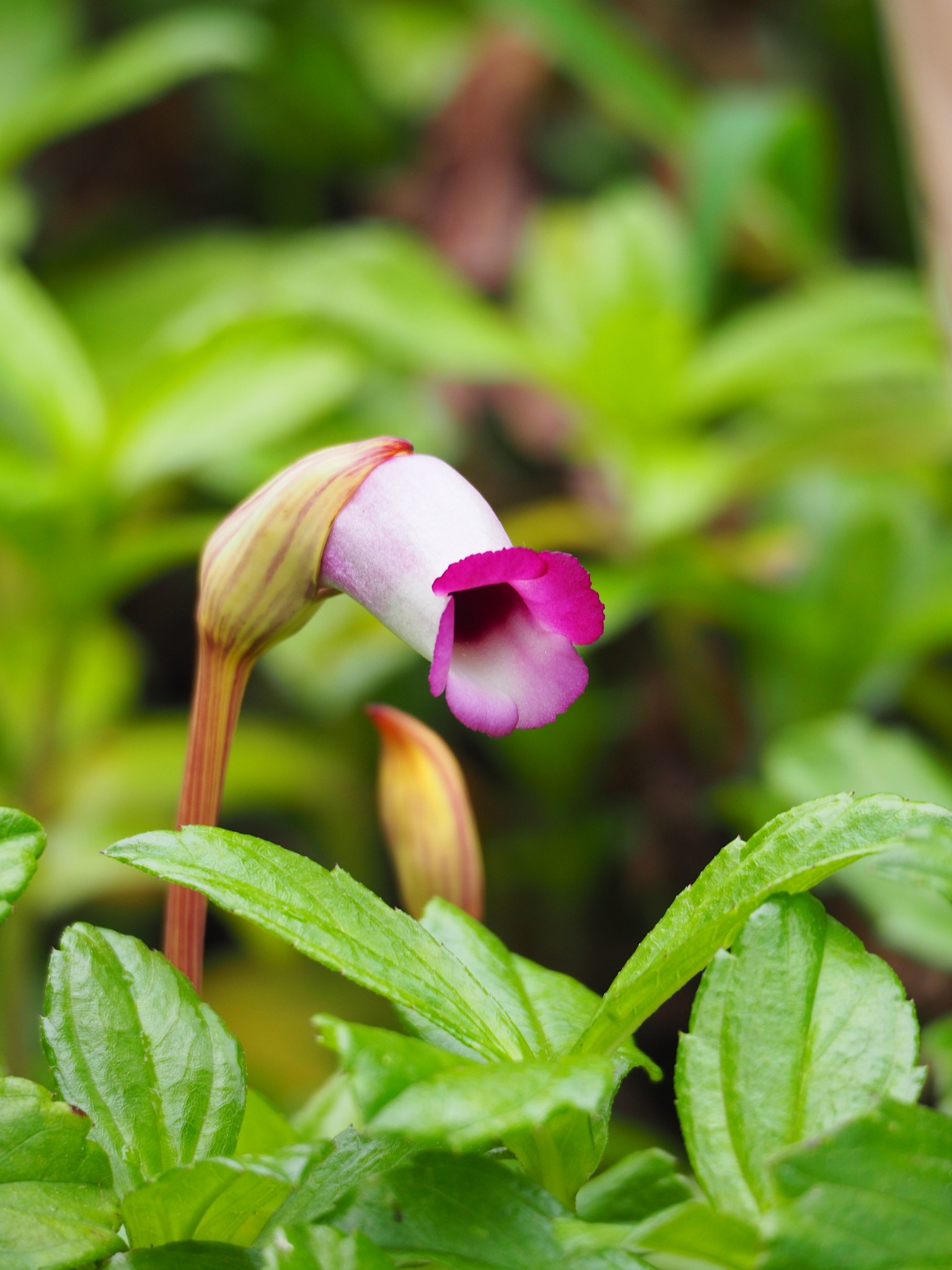
Aeginetia L. is a genus of holoparasitic flowering plants in the family Orobanchaceae, commonly called forest ghost flower or Indian broomrape. Lacking chlorophyll entirely, these plants cannot photosynthesize and depend fully on host plants—primarily grasses and bamboos of the Poaceae family—for all their nutritional needs. With largely subterranean stems bearing scale-like leaves and showy, tubular flowers emerging above ground in shades of pale yellow to reddish-purple, Aeginetia species are found across tropical and subtropical Asia.
Aeginetia L.
Commonly known as
Aeginetia
Aeginetia L. is a genus of holoparasitic flowering plants in the family Orobanchaceae, commonly called forest ghost flower or Indian broomrape. Lacking chlorophyll entirely, these plants cannot photosynthesize and depend fully on host plants—primarily grasses and bamboos of the Poaceae family—for all their nutritional needs. With largely subterranean stems bearing scale-like leaves and showy, tubular flowers emerging above ground in shades of pale yellow to reddish-purple, Aeginetia species are found across tropical and subtropical Asia.
Aeginetia L.
Commonly known as
Aeginetia
Aeginetia L. is a genus of holoparasitic flowering plants in the family Orobanchaceae, commonly called forest ghost flower or Indian broomrape. Lacking chlorophyll entirely, these plants cannot photosynthesize and depend fully on host plants—primarily grasses and bamboos of the Poaceae family—for all their nutritional needs. With largely subterranean stems bearing scale-like leaves and showy, tubular flowers emerging above ground in shades of pale yellow to reddish-purple, Aeginetia species are found across tropical and subtropical Asia.
Aeginetia L.
Commonly known as
Aeginetia
Aeginetia L. is a genus of holoparasitic flowering plants in the family Orobanchaceae, commonly called forest ghost flower or Indian broomrape. Lacking chlorophyll entirely, these plants cannot photosynthesize and depend fully on host plants—primarily grasses and bamboos of the Poaceae family—for all their nutritional needs. With largely subterranean stems bearing scale-like leaves and showy, tubular flowers emerging above ground in shades of pale yellow to reddish-purple, Aeginetia species are found across tropical and subtropical Asia.
Aeginetia L.
Commonly known as
Aeginetia
Aeginetia L. is a genus of holoparasitic flowering plants in the family Orobanchaceae, commonly called forest ghost flower or Indian broomrape. Lacking chlorophyll entirely, these plants cannot photosynthesize and depend fully on host plants—primarily grasses and bamboos of the Poaceae family—for all their nutritional needs. With largely subterranean stems bearing scale-like leaves and showy, tubular flowers emerging above ground in shades of pale yellow to reddish-purple, Aeginetia species are found across tropical and subtropical Asia.
Aeginetia L.
Commonly known as
Aeginetia
Aeginetia L. is a genus of holoparasitic flowering plants in the family Orobanchaceae, commonly called forest ghost flower or Indian broomrape. Lacking chlorophyll entirely, these plants cannot photosynthesize and depend fully on host plants—primarily grasses and bamboos of the Poaceae family—for all their nutritional needs. With largely subterranean stems bearing scale-like leaves and showy, tubular flowers emerging above ground in shades of pale yellow to reddish-purple, Aeginetia species are found across tropical and subtropical Asia.
Aeginetia L.
Commonly known as
Aeginetia
Aeginetia L. is a genus of holoparasitic flowering plants in the family Orobanchaceae, commonly called forest ghost flower or Indian broomrape. Lacking chlorophyll entirely, these plants cannot photosynthesize and depend fully on host plants—primarily grasses and bamboos of the Poaceae family—for all their nutritional needs. With largely subterranean stems bearing scale-like leaves and showy, tubular flowers emerging above ground in shades of pale yellow to reddish-purple, Aeginetia species are found across tropical and subtropical Asia.
Identification & Classification
Color & Surface
Vibrant "highlighter yellow" scales. They turn greenish when wet because the yellow skin becomes see-through, revealing the green algae inside.
Shape & Form
A scaly "crust" made of tiny, flat tiles. It grows in irregular patches that look like cracked paint or a tiled floor on the ground.
Fruiting
Small, sunken black or reddish dots in the center of the scales. These act like "launch pads" to release the lichen's spores.
Growth Habitat & Substrate
Strictly soil-dwelling in dry areas. It grows on dirt or among mosses. Pro tip: if it's on a bare rock, it's a different species.
Taxonomy Classification
Kingdom
Plantae
Division
Magnoliophyta
Class
Magnoliopsida
Order
Scrophulariales
Family
Orobanchaceae Vent.
Genus
Aeginetia L.
Identification & Classification
Color & Surface
Vibrant "highlighter yellow" scales. They turn greenish when wet because the yellow skin becomes see-through, revealing the green algae inside.
Shape & Form
A scaly "crust" made of tiny, flat tiles. It grows in irregular patches that look like cracked paint or a tiled floor on the ground.
Fruiting
Small, sunken black or reddish dots in the center of the scales. These act like "launch pads" to release the lichen's spores.
Growth Habitat & Substrate
Strictly soil-dwelling in dry areas. It grows on dirt or among mosses. Pro tip: if it's on a bare rock, it's a different species.
Taxonomy Classification
Kingdom
Plantae
Division
Magnoliophyta
Class
Magnoliopsida
Order
Scrophulariales
Family
Orobanchaceae Vent.
Genus
Aeginetia L.
Identification & Classification
Color & Surface
Vibrant "highlighter yellow" scales. They turn greenish when wet because the yellow skin becomes see-through, revealing the green algae inside.
Shape & Form
A scaly "crust" made of tiny, flat tiles. It grows in irregular patches that look like cracked paint or a tiled floor on the ground.
Fruiting
Small, sunken black or reddish dots in the center of the scales. These act like "launch pads" to release the lichen's spores.
Growth Habitat & Substrate
Strictly soil-dwelling in dry areas. It grows on dirt or among mosses. Pro tip: if it's on a bare rock, it's a different species.
Taxonomy Classification
Kingdom
Plantae
Division
Magnoliophyta
Class
Magnoliopsida
Order
Scrophulariales
Family
Orobanchaceae Vent.
Genus
Aeginetia L.
Identification & Classification
Color & Surface
Vibrant "highlighter yellow" scales. They turn greenish when wet because the yellow skin becomes see-through, revealing the green algae inside.
Shape & Form
A scaly "crust" made of tiny, flat tiles. It grows in irregular patches that look like cracked paint or a tiled floor on the ground.
Fruiting
Small, sunken black or reddish dots in the center of the scales. These act like "launch pads" to release the lichen's spores.
Growth Habitat & Substrate
Strictly soil-dwelling in dry areas. It grows on dirt or among mosses. Pro tip: if it's on a bare rock, it's a different species.
Taxonomy Classification
Kingdom
Plantae
Division
Magnoliophyta
Class
Magnoliopsida
Order
Scrophulariales
Family
Orobanchaceae Vent.
Genus
Aeginetia L.
Identification & Classification
Color & Surface
Vibrant "highlighter yellow" scales. They turn greenish when wet because the yellow skin becomes see-through, revealing the green algae inside.
Shape & Form
A scaly "crust" made of tiny, flat tiles. It grows in irregular patches that look like cracked paint or a tiled floor on the ground.
Fruiting
Small, sunken black or reddish dots in the center of the scales. These act like "launch pads" to release the lichen's spores.
Growth Habitat & Substrate
Strictly soil-dwelling in dry areas. It grows on dirt or among mosses. Pro tip: if it's on a bare rock, it's a different species.
Taxonomy Classification
Kingdom
Plantae
Division
Magnoliophyta
Class
Magnoliopsida
Order
Scrophulariales
Family
Orobanchaceae Vent.
Genus
Aeginetia L.
Identification & Classification
Color & Surface
Vibrant "highlighter yellow" scales. They turn greenish when wet because the yellow skin becomes see-through, revealing the green algae inside.
Shape & Form
A scaly "crust" made of tiny, flat tiles. It grows in irregular patches that look like cracked paint or a tiled floor on the ground.
Fruiting
Small, sunken black or reddish dots in the center of the scales. These act like "launch pads" to release the lichen's spores.
Growth Habitat & Substrate
Strictly soil-dwelling in dry areas. It grows on dirt or among mosses. Pro tip: if it's on a bare rock, it's a different species.
Taxonomy Classification
Kingdom
Plantae
Division
Magnoliophyta
Class
Magnoliopsida
Order
Scrophulariales
Family
Orobanchaceae Vent.
Genus
Aeginetia L.
Care Requirements
Sunlight
Thrives in partial shade to full shade, as it is a parasitic plant that depends on host roots rather than photosynthesis. Direct sunlight is unnecessary and may dry out exposed tissues.
Temperature
Prefers warm, tropical to subtropical temperatures, ideally between 20–30°C. Sensitive to frost and prolonged cold, which can inhibit flowering.
Nutrient
Does not require fertilization; obtains all nutrients from host plants through specialized root connections called haustoria.
Soil
Grows best in loose, humus-rich soils where host plants thrive. Soil type is less critical than the presence of suitable grass or sedge hosts.
Maintenance
Requires no direct maintenance. Management focuses on controlling spread if unwanted, as it can parasitize crops like sugarcane and grasses.
Water
Requires moderate moisture in the surrounding soil to support host plant health. Avoid waterlogging, which can damage both parasite and host root systems.
Care Requirements
Sunlight
Thrives in partial shade to full shade, as it is a parasitic plant that depends on host roots rather than photosynthesis. Direct sunlight is unnecessary and may dry out exposed tissues.
Temperature
Prefers warm, tropical to subtropical temperatures, ideally between 20–30°C. Sensitive to frost and prolonged cold, which can inhibit flowering.
Nutrient
Does not require fertilization; obtains all nutrients from host plants through specialized root connections called haustoria.
Soil
Grows best in loose, humus-rich soils where host plants thrive. Soil type is less critical than the presence of suitable grass or sedge hosts.
Maintenance
Requires no direct maintenance. Management focuses on controlling spread if unwanted, as it can parasitize crops like sugarcane and grasses.
Water
Requires moderate moisture in the surrounding soil to support host plant health. Avoid waterlogging, which can damage both parasite and host root systems.
Care Requirements
Sunlight
Thrives in partial shade to full shade, as it is a parasitic plant that depends on host roots rather than photosynthesis. Direct sunlight is unnecessary and may dry out exposed tissues.
Temperature
Prefers warm, tropical to subtropical temperatures, ideally between 20–30°C. Sensitive to frost and prolonged cold, which can inhibit flowering.
Nutrient
Does not require fertilization; obtains all nutrients from host plants through specialized root connections called haustoria.
Soil
Grows best in loose, humus-rich soils where host plants thrive. Soil type is less critical than the presence of suitable grass or sedge hosts.
Maintenance
Requires no direct maintenance. Management focuses on controlling spread if unwanted, as it can parasitize crops like sugarcane and grasses.
Water
Requires moderate moisture in the surrounding soil to support host plant health. Avoid waterlogging, which can damage both parasite and host root systems.
Care Requirements
Sunlight
Thrives in partial shade to full shade, as it is a parasitic plant that depends on host roots rather than photosynthesis. Direct sunlight is unnecessary and may dry out exposed tissues.
Temperature
Prefers warm, tropical to subtropical temperatures, ideally between 20–30°C. Sensitive to frost and prolonged cold, which can inhibit flowering.
Nutrient
Does not require fertilization; obtains all nutrients from host plants through specialized root connections called haustoria.
Soil
Grows best in loose, humus-rich soils where host plants thrive. Soil type is less critical than the presence of suitable grass or sedge hosts.
Maintenance
Requires no direct maintenance. Management focuses on controlling spread if unwanted, as it can parasitize crops like sugarcane and grasses.
Water
Requires moderate moisture in the surrounding soil to support host plant health. Avoid waterlogging, which can damage both parasite and host root systems.
Care Requirements
Sunlight
Thrives in partial shade to full shade, as it is a parasitic plant that depends on host roots rather than photosynthesis. Direct sunlight is unnecessary and may dry out exposed tissues.
Temperature
Prefers warm, tropical to subtropical temperatures, ideally between 20–30°C. Sensitive to frost and prolonged cold, which can inhibit flowering.
Nutrient
Does not require fertilization; obtains all nutrients from host plants through specialized root connections called haustoria.
Soil
Grows best in loose, humus-rich soils where host plants thrive. Soil type is less critical than the presence of suitable grass or sedge hosts.
Maintenance
Requires no direct maintenance. Management focuses on controlling spread if unwanted, as it can parasitize crops like sugarcane and grasses.
Water
Requires moderate moisture in the surrounding soil to support host plant health. Avoid waterlogging, which can damage both parasite and host root systems.
Care Requirements
Sunlight
Thrives in partial shade to full shade, as it is a parasitic plant that depends on host roots rather than photosynthesis. Direct sunlight is unnecessary and may dry out exposed tissues.
Temperature
Prefers warm, tropical to subtropical temperatures, ideally between 20–30°C. Sensitive to frost and prolonged cold, which can inhibit flowering.
Nutrient
Does not require fertilization; obtains all nutrients from host plants through specialized root connections called haustoria.
Soil
Grows best in loose, humus-rich soils where host plants thrive. Soil type is less critical than the presence of suitable grass or sedge hosts.
Maintenance
Requires no direct maintenance. Management focuses on controlling spread if unwanted, as it can parasitize crops like sugarcane and grasses.
Water
Requires moderate moisture in the surrounding soil to support host plant health. Avoid waterlogging, which can damage both parasite and host root systems.
Seasonal Behavior
Spring
Germination may begin in spring when soil temperatures rise and host roots become active, initiating attachment and early growth.

Autumn
Seeds mature and disperse in autumn. The plant dies back after seeding, leaving no visible above-ground presence.

Winter
Dormant during winter, surviving as seeds in the soil. Seeds require specific chemical signals from host roots to germinate.

Summer
Peak flowering occurs in summer, with distinctive tubular, purple or yellow flowers emerging above ground on leafless stalks.

Seasonal Behavior
Spring
Germination may begin in spring when soil temperatures rise and host roots become active, initiating attachment and early growth.
Autumn
Seeds mature and disperse in autumn. The plant dies back after seeding, leaving no visible above-ground presence.
Winter
Dormant during winter, surviving as seeds in the soil. Seeds require specific chemical signals from host roots to germinate.
Summer
Peak flowering occurs in summer, with distinctive tubular, purple or yellow flowers emerging above ground on leafless stalks.
Seasonal Behavior
Spring
Germination may begin in spring when soil temperatures rise and host roots become active, initiating attachment and early growth.
Autumn
Seeds mature and disperse in autumn. The plant dies back after seeding, leaving no visible above-ground presence.
Winter
Dormant during winter, surviving as seeds in the soil. Seeds require specific chemical signals from host roots to germinate.
Summer
Peak flowering occurs in summer, with distinctive tubular, purple or yellow flowers emerging above ground on leafless stalks.
Seasonal Behavior
Spring
Germination may begin in spring when soil temperatures rise and host roots become active, initiating attachment and early growth.
Autumn
Seeds mature and disperse in autumn. The plant dies back after seeding, leaving no visible above-ground presence.
Winter
Dormant during winter, surviving as seeds in the soil. Seeds require specific chemical signals from host roots to germinate.
Summer
Peak flowering occurs in summer, with distinctive tubular, purple or yellow flowers emerging above ground on leafless stalks.
Seasonal Behavior
Spring
Germination may begin in spring when soil temperatures rise and host roots become active, initiating attachment and early growth.
Autumn
Seeds mature and disperse in autumn. The plant dies back after seeding, leaving no visible above-ground presence.
Winter
Dormant during winter, surviving as seeds in the soil. Seeds require specific chemical signals from host roots to germinate.
Summer
Peak flowering occurs in summer, with distinctive tubular, purple or yellow flowers emerging above ground on leafless stalks.