Aerva Forssk.
Commonly known as
Aerva
Aerva Forssk. is a genus of perennial herbs and subshrubs in the family Amaranthaceae, native to tropical and subtropical regions of Africa, Madagascar, and Asia. Characterized by erect or prostrate growth, alternate or opposite entire leaves, and dense, woolly spikes of small, inconspicuous flowers, these hardy plants thrive in arid and semi-arid environments. The genus produces small, membranous, indehiscent fruits containing shiny black seeds and has a long history of use in traditional medicine as a diuretic, demulcent, and general tonic.
Aerva Forssk.
Commonly known as
Aerva
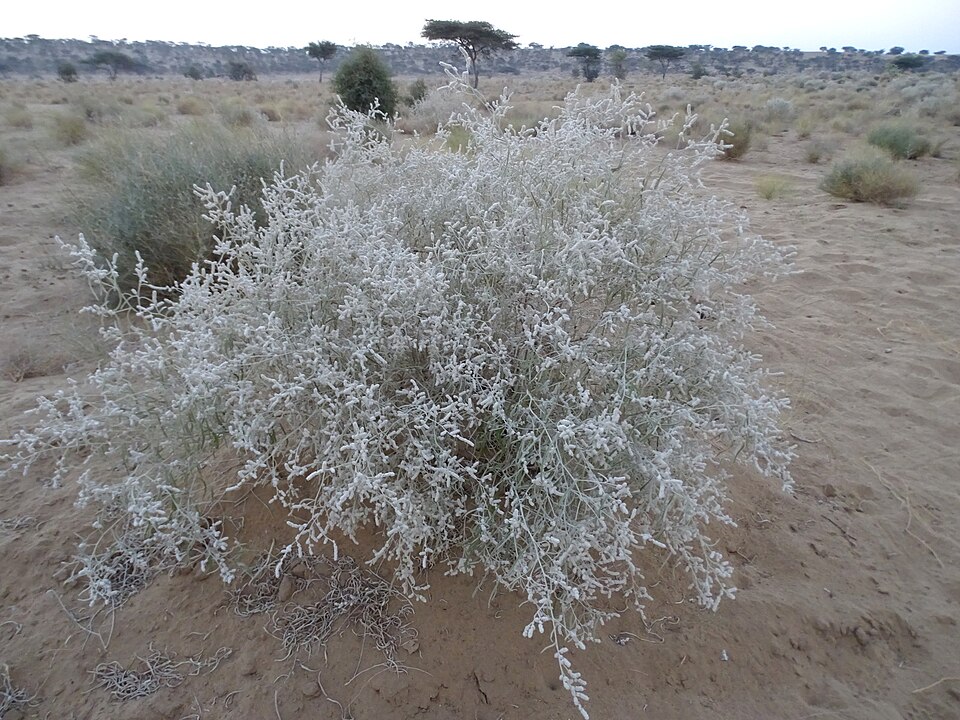
Aerva Forssk. is a genus of perennial herbs and subshrubs in the family Amaranthaceae, native to tropical and subtropical regions of Africa, Madagascar, and Asia. Characterized by erect or prostrate growth, alternate or opposite entire leaves, and dense, woolly spikes of small, inconspicuous flowers, these hardy plants thrive in arid and semi-arid environments. The genus produces small, membranous, indehiscent fruits containing shiny black seeds and has a long history of use in traditional medicine as a diuretic, demulcent, and general tonic.
Aerva Forssk.
Commonly known as
Aerva
Aerva Forssk. is a genus of perennial herbs and subshrubs in the family Amaranthaceae, native to tropical and subtropical regions of Africa, Madagascar, and Asia. Characterized by erect or prostrate growth, alternate or opposite entire leaves, and dense, woolly spikes of small, inconspicuous flowers, these hardy plants thrive in arid and semi-arid environments. The genus produces small, membranous, indehiscent fruits containing shiny black seeds and has a long history of use in traditional medicine as a diuretic, demulcent, and general tonic.
Aerva Forssk.
Commonly known as
Aerva
Aerva Forssk. is a genus of perennial herbs and subshrubs in the family Amaranthaceae, native to tropical and subtropical regions of Africa, Madagascar, and Asia. Characterized by erect or prostrate growth, alternate or opposite entire leaves, and dense, woolly spikes of small, inconspicuous flowers, these hardy plants thrive in arid and semi-arid environments. The genus produces small, membranous, indehiscent fruits containing shiny black seeds and has a long history of use in traditional medicine as a diuretic, demulcent, and general tonic.
Aerva Forssk.
Commonly known as
Aerva
Aerva Forssk. is a genus of perennial herbs and subshrubs in the family Amaranthaceae, native to tropical and subtropical regions of Africa, Madagascar, and Asia. Characterized by erect or prostrate growth, alternate or opposite entire leaves, and dense, woolly spikes of small, inconspicuous flowers, these hardy plants thrive in arid and semi-arid environments. The genus produces small, membranous, indehiscent fruits containing shiny black seeds and has a long history of use in traditional medicine as a diuretic, demulcent, and general tonic.
Aerva Forssk.
Commonly known as
Aerva
Aerva Forssk. is a genus of perennial herbs and subshrubs in the family Amaranthaceae, native to tropical and subtropical regions of Africa, Madagascar, and Asia. Characterized by erect or prostrate growth, alternate or opposite entire leaves, and dense, woolly spikes of small, inconspicuous flowers, these hardy plants thrive in arid and semi-arid environments. The genus produces small, membranous, indehiscent fruits containing shiny black seeds and has a long history of use in traditional medicine as a diuretic, demulcent, and general tonic.
Aerva Forssk.
Commonly known as
Aerva
Aerva Forssk. is a genus of perennial herbs and subshrubs in the family Amaranthaceae, native to tropical and subtropical regions of Africa, Madagascar, and Asia. Characterized by erect or prostrate growth, alternate or opposite entire leaves, and dense, woolly spikes of small, inconspicuous flowers, these hardy plants thrive in arid and semi-arid environments. The genus produces small, membranous, indehiscent fruits containing shiny black seeds and has a long history of use in traditional medicine as a diuretic, demulcent, and general tonic.
Identification & Classification
Color & Surface
Vibrant "highlighter yellow" scales. They turn greenish when wet because the yellow skin becomes see-through, revealing the green algae inside.
Shape & Form
A scaly "crust" made of tiny, flat tiles. It grows in irregular patches that look like cracked paint or a tiled floor on the ground.
Fruiting
Small, sunken black or reddish dots in the center of the scales. These act like "launch pads" to release the lichen's spores.
Growth Habitat & Substrate
Strictly soil-dwelling in dry areas. It grows on dirt or among mosses. Pro tip: if it's on a bare rock, it's a different species.
Taxonomy Classification
Kingdom
Plantae
Division
Magnoliophyta
Class
Magnoliopsida
Order
Caryophyllales
Family
Amaranthaceae Martinov
Genus
Aerva Forssk.
Identification & Classification
Color & Surface
Vibrant "highlighter yellow" scales. They turn greenish when wet because the yellow skin becomes see-through, revealing the green algae inside.
Shape & Form
A scaly "crust" made of tiny, flat tiles. It grows in irregular patches that look like cracked paint or a tiled floor on the ground.
Fruiting
Small, sunken black or reddish dots in the center of the scales. These act like "launch pads" to release the lichen's spores.
Growth Habitat & Substrate
Strictly soil-dwelling in dry areas. It grows on dirt or among mosses. Pro tip: if it's on a bare rock, it's a different species.
Taxonomy Classification
Kingdom
Plantae
Division
Magnoliophyta
Class
Magnoliopsida
Order
Caryophyllales
Family
Amaranthaceae Martinov
Genus
Aerva Forssk.
Identification & Classification
Color & Surface
Vibrant "highlighter yellow" scales. They turn greenish when wet because the yellow skin becomes see-through, revealing the green algae inside.
Shape & Form
A scaly "crust" made of tiny, flat tiles. It grows in irregular patches that look like cracked paint or a tiled floor on the ground.
Fruiting
Small, sunken black or reddish dots in the center of the scales. These act like "launch pads" to release the lichen's spores.
Growth Habitat & Substrate
Strictly soil-dwelling in dry areas. It grows on dirt or among mosses. Pro tip: if it's on a bare rock, it's a different species.
Taxonomy Classification
Kingdom
Plantae
Division
Magnoliophyta
Class
Magnoliopsida
Order
Caryophyllales
Family
Amaranthaceae Martinov
Genus
Aerva Forssk.
Identification & Classification
Color & Surface
Vibrant "highlighter yellow" scales. They turn greenish when wet because the yellow skin becomes see-through, revealing the green algae inside.
Shape & Form
A scaly "crust" made of tiny, flat tiles. It grows in irregular patches that look like cracked paint or a tiled floor on the ground.
Fruiting
Small, sunken black or reddish dots in the center of the scales. These act like "launch pads" to release the lichen's spores.
Growth Habitat & Substrate
Strictly soil-dwelling in dry areas. It grows on dirt or among mosses. Pro tip: if it's on a bare rock, it's a different species.
Taxonomy Classification
Kingdom
Plantae
Division
Magnoliophyta
Class
Magnoliopsida
Order
Caryophyllales
Family
Amaranthaceae Martinov
Genus
Aerva Forssk.
Identification & Classification
Color & Surface
Vibrant "highlighter yellow" scales. They turn greenish when wet because the yellow skin becomes see-through, revealing the green algae inside.
Shape & Form
A scaly "crust" made of tiny, flat tiles. It grows in irregular patches that look like cracked paint or a tiled floor on the ground.
Fruiting
Small, sunken black or reddish dots in the center of the scales. These act like "launch pads" to release the lichen's spores.
Growth Habitat & Substrate
Strictly soil-dwelling in dry areas. It grows on dirt or among mosses. Pro tip: if it's on a bare rock, it's a different species.
Taxonomy Classification
Kingdom
Plantae
Division
Magnoliophyta
Class
Magnoliopsida
Order
Caryophyllales
Family
Amaranthaceae Martinov
Genus
Aerva Forssk.
Identification & Classification
Color & Surface
Vibrant "highlighter yellow" scales. They turn greenish when wet because the yellow skin becomes see-through, revealing the green algae inside.
Shape & Form
A scaly "crust" made of tiny, flat tiles. It grows in irregular patches that look like cracked paint or a tiled floor on the ground.
Fruiting
Small, sunken black or reddish dots in the center of the scales. These act like "launch pads" to release the lichen's spores.
Growth Habitat & Substrate
Strictly soil-dwelling in dry areas. It grows on dirt or among mosses. Pro tip: if it's on a bare rock, it's a different species.
Taxonomy Classification
Kingdom
Plantae
Division
Magnoliophyta
Class
Magnoliopsida
Order
Caryophyllales
Family
Amaranthaceae Martinov
Genus
Aerva Forssk.
Care Requirements
Sunlight
Thrives in full sun to partial shade, requiring at least 4–6 hours of direct sunlight daily for optimal growth and flowering.
Temperature
Grows best in warm to hot climates, ideally between 20–35°C. Tolerates heat well but is sensitive to frost and prolonged cold.
Nutrient
Requires minimal fertilization. A light application of balanced fertilizer in spring is sufficient; over-fertilizing can reduce hardiness.
Soil
Adapts to a wide range of soils, from sandy to loamy, as long as drainage is good. Tolerates poor, rocky, or alkaline soils.
Maintenance
Low-maintenance plant. Prune lightly to shape and remove dead growth. Can spread readily, so monitor in garden settings.
Water
Drought-tolerant once established. Prefers moderate watering, allowing soil to dry between waterings. Avoid overwatering to prevent root rot.
Care Requirements
Sunlight
Thrives in full sun to partial shade, requiring at least 4–6 hours of direct sunlight daily for optimal growth and flowering.
Temperature
Grows best in warm to hot climates, ideally between 20–35°C. Tolerates heat well but is sensitive to frost and prolonged cold.
Nutrient
Requires minimal fertilization. A light application of balanced fertilizer in spring is sufficient; over-fertilizing can reduce hardiness.
Soil
Adapts to a wide range of soils, from sandy to loamy, as long as drainage is good. Tolerates poor, rocky, or alkaline soils.
Maintenance
Low-maintenance plant. Prune lightly to shape and remove dead growth. Can spread readily, so monitor in garden settings.
Water
Drought-tolerant once established. Prefers moderate watering, allowing soil to dry between waterings. Avoid overwatering to prevent root rot.
Care Requirements
Sunlight
Thrives in full sun to partial shade, requiring at least 4–6 hours of direct sunlight daily for optimal growth and flowering.
Temperature
Grows best in warm to hot climates, ideally between 20–35°C. Tolerates heat well but is sensitive to frost and prolonged cold.
Nutrient
Requires minimal fertilization. A light application of balanced fertilizer in spring is sufficient; over-fertilizing can reduce hardiness.
Soil
Adapts to a wide range of soils, from sandy to loamy, as long as drainage is good. Tolerates poor, rocky, or alkaline soils.
Maintenance
Low-maintenance plant. Prune lightly to shape and remove dead growth. Can spread readily, so monitor in garden settings.
Water
Drought-tolerant once established. Prefers moderate watering, allowing soil to dry between waterings. Avoid overwatering to prevent root rot.
Care Requirements
Sunlight
Thrives in full sun to partial shade, requiring at least 4–6 hours of direct sunlight daily for optimal growth and flowering.
Temperature
Grows best in warm to hot climates, ideally between 20–35°C. Tolerates heat well but is sensitive to frost and prolonged cold.
Nutrient
Requires minimal fertilization. A light application of balanced fertilizer in spring is sufficient; over-fertilizing can reduce hardiness.
Soil
Adapts to a wide range of soils, from sandy to loamy, as long as drainage is good. Tolerates poor, rocky, or alkaline soils.
Maintenance
Low-maintenance plant. Prune lightly to shape and remove dead growth. Can spread readily, so monitor in garden settings.
Water
Drought-tolerant once established. Prefers moderate watering, allowing soil to dry between waterings. Avoid overwatering to prevent root rot.
Care Requirements
Sunlight
Thrives in full sun to partial shade, requiring at least 4–6 hours of direct sunlight daily for optimal growth and flowering.
Temperature
Grows best in warm to hot climates, ideally between 20–35°C. Tolerates heat well but is sensitive to frost and prolonged cold.
Nutrient
Requires minimal fertilization. A light application of balanced fertilizer in spring is sufficient; over-fertilizing can reduce hardiness.
Soil
Adapts to a wide range of soils, from sandy to loamy, as long as drainage is good. Tolerates poor, rocky, or alkaline soils.
Maintenance
Low-maintenance plant. Prune lightly to shape and remove dead growth. Can spread readily, so monitor in garden settings.
Water
Drought-tolerant once established. Prefers moderate watering, allowing soil to dry between waterings. Avoid overwatering to prevent root rot.
Care Requirements
Sunlight
Thrives in full sun to partial shade, requiring at least 4–6 hours of direct sunlight daily for optimal growth and flowering.
Temperature
Grows best in warm to hot climates, ideally between 20–35°C. Tolerates heat well but is sensitive to frost and prolonged cold.
Nutrient
Requires minimal fertilization. A light application of balanced fertilizer in spring is sufficient; over-fertilizing can reduce hardiness.
Soil
Adapts to a wide range of soils, from sandy to loamy, as long as drainage is good. Tolerates poor, rocky, or alkaline soils.
Maintenance
Low-maintenance plant. Prune lightly to shape and remove dead growth. Can spread readily, so monitor in garden settings.
Water
Drought-tolerant once established. Prefers moderate watering, allowing soil to dry between waterings. Avoid overwatering to prevent root rot.
Seasonal Behavior
Spring
New growth emerges vigorously in spring as temperatures rise. This is the ideal time for planting or dividing established clumps.

Autumn
Growth slows in autumn. Seeds mature and can be collected for propagation. Foliage may begin to yellow in cooler regions.

Winter
Semi-dormant or dormant in winter depending on climate. In frost-prone areas, the plant may die back but can regrow from roots.

Summer
Active growth and flowering continue through summer. Woolly flower spikes develop, attracting pollinators to the garden.

Seasonal Behavior
Spring
New growth emerges vigorously in spring as temperatures rise. This is the ideal time for planting or dividing established clumps.
Autumn
Growth slows in autumn. Seeds mature and can be collected for propagation. Foliage may begin to yellow in cooler regions.
Winter
Semi-dormant or dormant in winter depending on climate. In frost-prone areas, the plant may die back but can regrow from roots.
Summer
Active growth and flowering continue through summer. Woolly flower spikes develop, attracting pollinators to the garden.
Seasonal Behavior
Spring
New growth emerges vigorously in spring as temperatures rise. This is the ideal time for planting or dividing established clumps.
Autumn
Growth slows in autumn. Seeds mature and can be collected for propagation. Foliage may begin to yellow in cooler regions.
Winter
Semi-dormant or dormant in winter depending on climate. In frost-prone areas, the plant may die back but can regrow from roots.
Summer
Active growth and flowering continue through summer. Woolly flower spikes develop, attracting pollinators to the garden.
Seasonal Behavior
Spring
New growth emerges vigorously in spring as temperatures rise. This is the ideal time for planting or dividing established clumps.
Autumn
Growth slows in autumn. Seeds mature and can be collected for propagation. Foliage may begin to yellow in cooler regions.
Winter
Semi-dormant or dormant in winter depending on climate. In frost-prone areas, the plant may die back but can regrow from roots.
Summer
Active growth and flowering continue through summer. Woolly flower spikes develop, attracting pollinators to the garden.
Seasonal Behavior
Spring
New growth emerges vigorously in spring as temperatures rise. This is the ideal time for planting or dividing established clumps.
Autumn
Growth slows in autumn. Seeds mature and can be collected for propagation. Foliage may begin to yellow in cooler regions.
Winter
Semi-dormant or dormant in winter depending on climate. In frost-prone areas, the plant may die back but can regrow from roots.
Summer
Active growth and flowering continue through summer. Woolly flower spikes develop, attracting pollinators to the garden.