Aesculus Californica (Spach) Nutt.
Commonly known as
California Buckeye
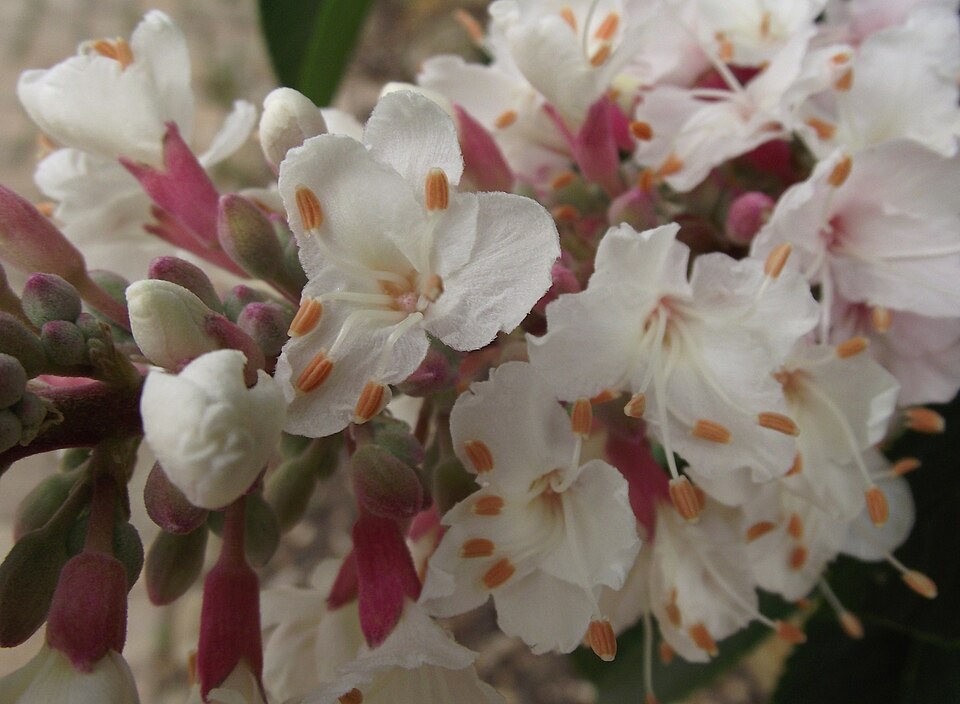
Aesculus Californica is a California native tree with showy white-pink flower spikes, rounded canopy, and drought tolerance.
Aesculus Californica (Spach) Nutt.
Commonly known as
California Buckeye
Aesculus Californica is a California native tree with showy white-pink flower spikes, rounded canopy, and drought tolerance.
Aesculus Californica (Spach) Nutt.
Commonly known as
California Buckeye
Aesculus Californica is a California native tree with showy white-pink flower spikes, rounded canopy, and drought tolerance.
Aesculus Californica (Spach) Nutt.
Commonly known as
California Buckeye
Aesculus Californica is a California native tree with showy white-pink flower spikes, rounded canopy, and drought tolerance.
Aesculus Californica (Spach) Nutt.
Commonly known as
California Buckeye
Aesculus Californica is a California native tree with showy white-pink flower spikes, rounded canopy, and drought tolerance.
Aesculus Californica (Spach) Nutt.
Commonly known as
California Buckeye
Aesculus Californica is a California native tree with showy white-pink flower spikes, rounded canopy, and drought tolerance.
Aesculus Californica (Spach) Nutt.
Commonly known as
California Buckeye
Aesculus Californica is a California native tree with showy white-pink flower spikes, rounded canopy, and drought tolerance.
Identification & Classification
Color & Surface
Vibrant "highlighter yellow" scales. They turn greenish when wet because the yellow skin becomes see-through, revealing the green algae inside.
Shape & Form
A scaly "crust" made of tiny, flat tiles. It grows in irregular patches that look like cracked paint or a tiled floor on the ground.
Fruiting
Small, sunken black or reddish dots in the center of the scales. These act like "launch pads" to release the lichen's spores.
Growth Habitat & Substrate
Strictly soil-dwelling in dry areas. It grows on dirt or among mosses. Pro tip: if it's on a bare rock, it's a different species.
Taxonomy Classification
Kingdom
Plantae
Division
Magnoliophyta
Class
Magnoliopsida
Order
Sapindales
Family
Hippocastanaceae A. Rich.
Genus
Aesculus L.
Species
Aesculus Californica (Spach) Nutt.
Identification & Classification
Color & Surface
Vibrant "highlighter yellow" scales. They turn greenish when wet because the yellow skin becomes see-through, revealing the green algae inside.
Shape & Form
A scaly "crust" made of tiny, flat tiles. It grows in irregular patches that look like cracked paint or a tiled floor on the ground.
Fruiting
Small, sunken black or reddish dots in the center of the scales. These act like "launch pads" to release the lichen's spores.
Growth Habitat & Substrate
Strictly soil-dwelling in dry areas. It grows on dirt or among mosses. Pro tip: if it's on a bare rock, it's a different species.
Taxonomy Classification
Kingdom
Plantae
Division
Magnoliophyta
Class
Magnoliopsida
Order
Sapindales
Family
Hippocastanaceae A. Rich.
Genus
Aesculus L.
Species
Aesculus Californica (Spach) Nutt.
Identification & Classification
Color & Surface
Vibrant "highlighter yellow" scales. They turn greenish when wet because the yellow skin becomes see-through, revealing the green algae inside.
Shape & Form
A scaly "crust" made of tiny, flat tiles. It grows in irregular patches that look like cracked paint or a tiled floor on the ground.
Fruiting
Small, sunken black or reddish dots in the center of the scales. These act like "launch pads" to release the lichen's spores.
Growth Habitat & Substrate
Strictly soil-dwelling in dry areas. It grows on dirt or among mosses. Pro tip: if it's on a bare rock, it's a different species.
Taxonomy Classification
Kingdom
Plantae
Division
Magnoliophyta
Class
Magnoliopsida
Order
Sapindales
Family
Hippocastanaceae A. Rich.
Genus
Aesculus L.
Species
Aesculus Californica (Spach) Nutt.
Identification & Classification
Color & Surface
Vibrant "highlighter yellow" scales. They turn greenish when wet because the yellow skin becomes see-through, revealing the green algae inside.
Shape & Form
A scaly "crust" made of tiny, flat tiles. It grows in irregular patches that look like cracked paint or a tiled floor on the ground.
Fruiting
Small, sunken black or reddish dots in the center of the scales. These act like "launch pads" to release the lichen's spores.
Growth Habitat & Substrate
Strictly soil-dwelling in dry areas. It grows on dirt or among mosses. Pro tip: if it's on a bare rock, it's a different species.
Taxonomy Classification
Kingdom
Plantae
Division
Magnoliophyta
Class
Magnoliopsida
Order
Sapindales
Family
Hippocastanaceae A. Rich.
Genus
Aesculus L.
Species
Aesculus Californica (Spach) Nutt.
Identification & Classification
Color & Surface
Vibrant "highlighter yellow" scales. They turn greenish when wet because the yellow skin becomes see-through, revealing the green algae inside.
Shape & Form
A scaly "crust" made of tiny, flat tiles. It grows in irregular patches that look like cracked paint or a tiled floor on the ground.
Fruiting
Small, sunken black or reddish dots in the center of the scales. These act like "launch pads" to release the lichen's spores.
Growth Habitat & Substrate
Strictly soil-dwelling in dry areas. It grows on dirt or among mosses. Pro tip: if it's on a bare rock, it's a different species.
Taxonomy Classification
Kingdom
Plantae
Division
Magnoliophyta
Class
Magnoliopsida
Order
Sapindales
Family
Hippocastanaceae A. Rich.
Genus
Aesculus L.
Species
Aesculus Californica (Spach) Nutt.
Identification & Classification
Color & Surface
Vibrant "highlighter yellow" scales. They turn greenish when wet because the yellow skin becomes see-through, revealing the green algae inside.
Shape & Form
A scaly "crust" made of tiny, flat tiles. It grows in irregular patches that look like cracked paint or a tiled floor on the ground.
Fruiting
Small, sunken black or reddish dots in the center of the scales. These act like "launch pads" to release the lichen's spores.
Growth Habitat & Substrate
Strictly soil-dwelling in dry areas. It grows on dirt or among mosses. Pro tip: if it's on a bare rock, it's a different species.
Taxonomy Classification
Kingdom
Plantae
Division
Magnoliophyta
Class
Magnoliopsida
Order
Sapindales
Family
Hippocastanaceae A. Rich.
Genus
Aesculus L.
Species
Aesculus Californica (Spach) Nutt.
Care Requirements
Sunlight
Prefers full sun to partial shade, thriving with at least 6 hours of direct sunlight. Tolerates some shade but flowering may be reduced.
Temperature
Thrives in Mediterranean climates with hot, dry summers and mild, wet winters. Tolerates temperatures from near freezing to over 35°C.
Nutrient
Requires little to no fertilization in native soils. Excessive feeding can promote weak, leggy growth and reduce drought tolerance.
Soil
Grows best in well-drained, loamy to rocky soils. Tolerates poor, dry soils and slopes. Avoid heavy clay or waterlogged conditions.
Maintenance
Low-maintenance tree. Prune dead or crossing branches in late winter. Leaf drop in summer is natural and not a sign of stress.
Water
Drought-tolerant once established, adapted to California's dry summers. Water deeply but infrequently; avoid summer irrigation, which can cause root rot.
Care Requirements
Sunlight
Prefers full sun to partial shade, thriving with at least 6 hours of direct sunlight. Tolerates some shade but flowering may be reduced.
Temperature
Thrives in Mediterranean climates with hot, dry summers and mild, wet winters. Tolerates temperatures from near freezing to over 35°C.
Nutrient
Requires little to no fertilization in native soils. Excessive feeding can promote weak, leggy growth and reduce drought tolerance.
Soil
Grows best in well-drained, loamy to rocky soils. Tolerates poor, dry soils and slopes. Avoid heavy clay or waterlogged conditions.
Maintenance
Low-maintenance tree. Prune dead or crossing branches in late winter. Leaf drop in summer is natural and not a sign of stress.
Water
Drought-tolerant once established, adapted to California's dry summers. Water deeply but infrequently; avoid summer irrigation, which can cause root rot.
Care Requirements
Sunlight
Prefers full sun to partial shade, thriving with at least 6 hours of direct sunlight. Tolerates some shade but flowering may be reduced.
Temperature
Thrives in Mediterranean climates with hot, dry summers and mild, wet winters. Tolerates temperatures from near freezing to over 35°C.
Nutrient
Requires little to no fertilization in native soils. Excessive feeding can promote weak, leggy growth and reduce drought tolerance.
Soil
Grows best in well-drained, loamy to rocky soils. Tolerates poor, dry soils and slopes. Avoid heavy clay or waterlogged conditions.
Maintenance
Low-maintenance tree. Prune dead or crossing branches in late winter. Leaf drop in summer is natural and not a sign of stress.
Water
Drought-tolerant once established, adapted to California's dry summers. Water deeply but infrequently; avoid summer irrigation, which can cause root rot.
Care Requirements
Sunlight
Prefers full sun to partial shade, thriving with at least 6 hours of direct sunlight. Tolerates some shade but flowering may be reduced.
Temperature
Thrives in Mediterranean climates with hot, dry summers and mild, wet winters. Tolerates temperatures from near freezing to over 35°C.
Nutrient
Requires little to no fertilization in native soils. Excessive feeding can promote weak, leggy growth and reduce drought tolerance.
Soil
Grows best in well-drained, loamy to rocky soils. Tolerates poor, dry soils and slopes. Avoid heavy clay or waterlogged conditions.
Maintenance
Low-maintenance tree. Prune dead or crossing branches in late winter. Leaf drop in summer is natural and not a sign of stress.
Water
Drought-tolerant once established, adapted to California's dry summers. Water deeply but infrequently; avoid summer irrigation, which can cause root rot.
Care Requirements
Sunlight
Prefers full sun to partial shade, thriving with at least 6 hours of direct sunlight. Tolerates some shade but flowering may be reduced.
Temperature
Thrives in Mediterranean climates with hot, dry summers and mild, wet winters. Tolerates temperatures from near freezing to over 35°C.
Nutrient
Requires little to no fertilization in native soils. Excessive feeding can promote weak, leggy growth and reduce drought tolerance.
Soil
Grows best in well-drained, loamy to rocky soils. Tolerates poor, dry soils and slopes. Avoid heavy clay or waterlogged conditions.
Maintenance
Low-maintenance tree. Prune dead or crossing branches in late winter. Leaf drop in summer is natural and not a sign of stress.
Water
Drought-tolerant once established, adapted to California's dry summers. Water deeply but infrequently; avoid summer irrigation, which can cause root rot.
Care Requirements
Sunlight
Prefers full sun to partial shade, thriving with at least 6 hours of direct sunlight. Tolerates some shade but flowering may be reduced.
Temperature
Thrives in Mediterranean climates with hot, dry summers and mild, wet winters. Tolerates temperatures from near freezing to over 35°C.
Nutrient
Requires little to no fertilization in native soils. Excessive feeding can promote weak, leggy growth and reduce drought tolerance.
Soil
Grows best in well-drained, loamy to rocky soils. Tolerates poor, dry soils and slopes. Avoid heavy clay or waterlogged conditions.
Maintenance
Low-maintenance tree. Prune dead or crossing branches in late winter. Leaf drop in summer is natural and not a sign of stress.
Water
Drought-tolerant once established, adapted to California's dry summers. Water deeply but infrequently; avoid summer irrigation, which can cause root rot.
Seasonal Behavior
Spring
Bursts into growth in early spring with lush, palmate leaves and showy white to pale pink flower spikes. Peak ornamental season.

Autumn
Remains leafless through autumn. Large, leathery seed pods mature and drop, releasing glossy brown seeds (buckeyes).

Winter
Dormant with bare, silvery-grey branches. Winter rains stimulate root activity in preparation for spring growth.

Summer
Enters summer dormancy, dropping leaves by midsummer as a drought adaptation. This is normal and conserves water during dry months.

Seasonal Behavior
Spring
Bursts into growth in early spring with lush, palmate leaves and showy white to pale pink flower spikes. Peak ornamental season.
Autumn
Remains leafless through autumn. Large, leathery seed pods mature and drop, releasing glossy brown seeds (buckeyes).
Winter
Dormant with bare, silvery-grey branches. Winter rains stimulate root activity in preparation for spring growth.
Summer
Enters summer dormancy, dropping leaves by midsummer as a drought adaptation. This is normal and conserves water during dry months.
Seasonal Behavior
Spring
Bursts into growth in early spring with lush, palmate leaves and showy white to pale pink flower spikes. Peak ornamental season.
Autumn
Remains leafless through autumn. Large, leathery seed pods mature and drop, releasing glossy brown seeds (buckeyes).
Winter
Dormant with bare, silvery-grey branches. Winter rains stimulate root activity in preparation for spring growth.
Summer
Enters summer dormancy, dropping leaves by midsummer as a drought adaptation. This is normal and conserves water during dry months.
Seasonal Behavior
Spring
Bursts into growth in early spring with lush, palmate leaves and showy white to pale pink flower spikes. Peak ornamental season.
Autumn
Remains leafless through autumn. Large, leathery seed pods mature and drop, releasing glossy brown seeds (buckeyes).
Winter
Dormant with bare, silvery-grey branches. Winter rains stimulate root activity in preparation for spring growth.
Summer
Enters summer dormancy, dropping leaves by midsummer as a drought adaptation. This is normal and conserves water during dry months.
Seasonal Behavior
Spring
Bursts into growth in early spring with lush, palmate leaves and showy white to pale pink flower spikes. Peak ornamental season.
Autumn
Remains leafless through autumn. Large, leathery seed pods mature and drop, releasing glossy brown seeds (buckeyes).
Winter
Dormant with bare, silvery-grey branches. Winter rains stimulate root activity in preparation for spring growth.
Summer
Enters summer dormancy, dropping leaves by midsummer as a drought adaptation. This is normal and conserves water during dry months.