Andreaea Hedw.
Commonly known as
Andreaea Moss
Andreaea Hedw. is a small, dark moss forming brittle mats on rocks in cold, exposed places. Capsules open like lanterns.
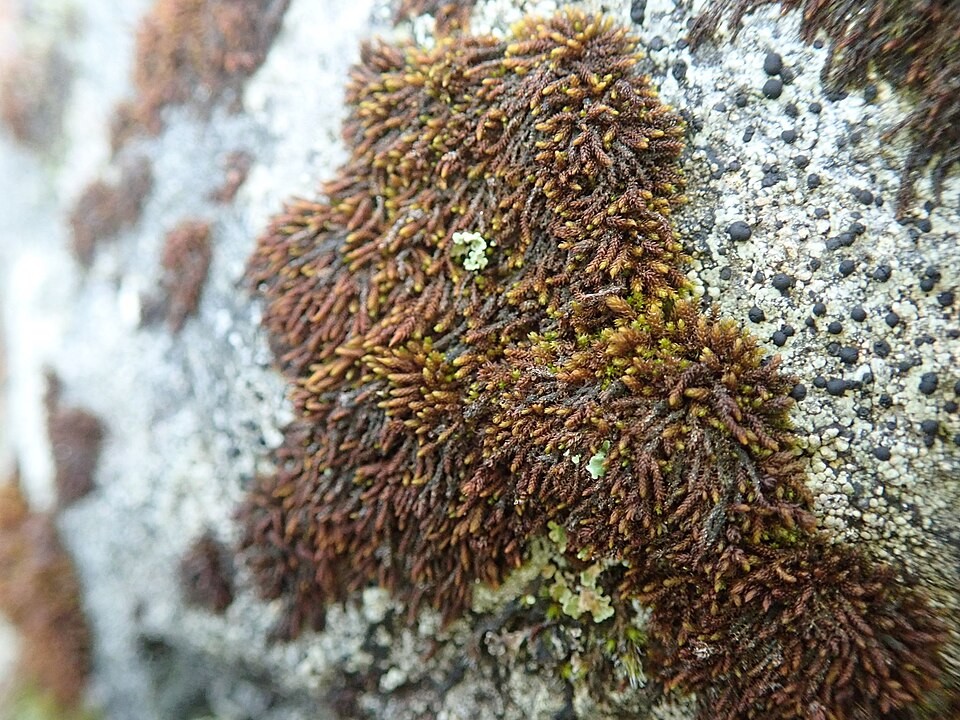
Andreaea Hedw.
Commonly known as
Andreaea Moss
Andreaea Hedw. is a small, dark moss forming brittle mats on rocks in cold, exposed places. Capsules open like lanterns.
Andreaea Hedw.
Commonly known as
Andreaea Moss
Andreaea Hedw. is a small, dark moss forming brittle mats on rocks in cold, exposed places. Capsules open like lanterns.
Andreaea Hedw.
Commonly known as
Andreaea Moss
Andreaea Hedw. is a small, dark moss forming brittle mats on rocks in cold, exposed places. Capsules open like lanterns.
Andreaea Hedw.
Commonly known as
Andreaea Moss
Andreaea Hedw. is a small, dark moss forming brittle mats on rocks in cold, exposed places. Capsules open like lanterns.
Andreaea Hedw.
Commonly known as
Andreaea Moss
Andreaea Hedw. is a small, dark moss forming brittle mats on rocks in cold, exposed places. Capsules open like lanterns.
Andreaea Hedw.
Commonly known as
Andreaea Moss
Andreaea Hedw. is a small, dark moss forming brittle mats on rocks in cold, exposed places. Capsules open like lanterns.
Identification & Classification
Color & Surface
Vibrant "highlighter yellow" scales. They turn greenish when wet because the yellow skin becomes see-through, revealing the green algae inside.
Shape & Form
A scaly "crust" made of tiny, flat tiles. It grows in irregular patches that look like cracked paint or a tiled floor on the ground.
Fruiting
Small, sunken black or reddish dots in the center of the scales. These act like "launch pads" to release the lichen's spores.
Growth Habitat & Substrate
Strictly soil-dwelling in dry areas. It grows on dirt or among mosses. Pro tip: if it's on a bare rock, it's a different species.
Taxonomy Classification
Kingdom
Plantae
Division
Bryophyta
Class
Andreaeopsida
Order
Andreaeales
Family
Andreaeaceae Dumort.
Genus
Andreaea Hedw.
Identification & Classification
Color & Surface
Vibrant "highlighter yellow" scales. They turn greenish when wet because the yellow skin becomes see-through, revealing the green algae inside.
Shape & Form
A scaly "crust" made of tiny, flat tiles. It grows in irregular patches that look like cracked paint or a tiled floor on the ground.
Fruiting
Small, sunken black or reddish dots in the center of the scales. These act like "launch pads" to release the lichen's spores.
Growth Habitat & Substrate
Strictly soil-dwelling in dry areas. It grows on dirt or among mosses. Pro tip: if it's on a bare rock, it's a different species.
Taxonomy Classification
Kingdom
Plantae
Division
Bryophyta
Class
Andreaeopsida
Order
Andreaeales
Family
Andreaeaceae Dumort.
Genus
Andreaea Hedw.
Identification & Classification
Color & Surface
Vibrant "highlighter yellow" scales. They turn greenish when wet because the yellow skin becomes see-through, revealing the green algae inside.
Shape & Form
A scaly "crust" made of tiny, flat tiles. It grows in irregular patches that look like cracked paint or a tiled floor on the ground.
Fruiting
Small, sunken black or reddish dots in the center of the scales. These act like "launch pads" to release the lichen's spores.
Growth Habitat & Substrate
Strictly soil-dwelling in dry areas. It grows on dirt or among mosses. Pro tip: if it's on a bare rock, it's a different species.
Taxonomy Classification
Kingdom
Plantae
Division
Bryophyta
Class
Andreaeopsida
Order
Andreaeales
Family
Andreaeaceae Dumort.
Genus
Andreaea Hedw.
Identification & Classification
Color & Surface
Vibrant "highlighter yellow" scales. They turn greenish when wet because the yellow skin becomes see-through, revealing the green algae inside.
Shape & Form
A scaly "crust" made of tiny, flat tiles. It grows in irregular patches that look like cracked paint or a tiled floor on the ground.
Fruiting
Small, sunken black or reddish dots in the center of the scales. These act like "launch pads" to release the lichen's spores.
Growth Habitat & Substrate
Strictly soil-dwelling in dry areas. It grows on dirt or among mosses. Pro tip: if it's on a bare rock, it's a different species.
Taxonomy Classification
Kingdom
Plantae
Division
Bryophyta
Class
Andreaeopsida
Order
Andreaeales
Family
Andreaeaceae Dumort.
Genus
Andreaea Hedw.
Identification & Classification
Color & Surface
Vibrant "highlighter yellow" scales. They turn greenish when wet because the yellow skin becomes see-through, revealing the green algae inside.
Shape & Form
A scaly "crust" made of tiny, flat tiles. It grows in irregular patches that look like cracked paint or a tiled floor on the ground.
Fruiting
Small, sunken black or reddish dots in the center of the scales. These act like "launch pads" to release the lichen's spores.
Growth Habitat & Substrate
Strictly soil-dwelling in dry areas. It grows on dirt or among mosses. Pro tip: if it's on a bare rock, it's a different species.
Taxonomy Classification
Kingdom
Plantae
Division
Bryophyta
Class
Andreaeopsida
Order
Andreaeales
Family
Andreaeaceae Dumort.
Genus
Andreaea Hedw.
Identification & Classification
Color & Surface
Vibrant "highlighter yellow" scales. They turn greenish when wet because the yellow skin becomes see-through, revealing the green algae inside.
Shape & Form
A scaly "crust" made of tiny, flat tiles. It grows in irregular patches that look like cracked paint or a tiled floor on the ground.
Fruiting
Small, sunken black or reddish dots in the center of the scales. These act like "launch pads" to release the lichen's spores.
Growth Habitat & Substrate
Strictly soil-dwelling in dry areas. It grows on dirt or among mosses. Pro tip: if it's on a bare rock, it's a different species.
Taxonomy Classification
Kingdom
Plantae
Division
Bryophyta
Class
Andreaeopsida
Order
Andreaeales
Family
Andreaeaceae Dumort.
Genus
Andreaea Hedw.
Care Requirements
Sunlight
Prefers exposed, rocky habitats with ample sunlight or partial shade.
Temperature
Thrives in cool to cold temperatures, often found in alpine or subalpine regions.
Nutrient
Does not require fertilization; obtains nutrients from rainwater and mineral-rich substrates.
Soil
Grows best on acidic, well-drained rocky substrates with minimal organic matter.
Maintenance
Minimal maintenance required; avoid disturbing the moss or its substrate.
Water
Requires moderate moisture; tolerates brief dry periods but prefers consistent humidity.
Care Requirements
Sunlight
Prefers exposed, rocky habitats with ample sunlight or partial shade.
Temperature
Thrives in cool to cold temperatures, often found in alpine or subalpine regions.
Nutrient
Does not require fertilization; obtains nutrients from rainwater and mineral-rich substrates.
Soil
Grows best on acidic, well-drained rocky substrates with minimal organic matter.
Maintenance
Minimal maintenance required; avoid disturbing the moss or its substrate.
Water
Requires moderate moisture; tolerates brief dry periods but prefers consistent humidity.
Care Requirements
Sunlight
Prefers exposed, rocky habitats with ample sunlight or partial shade.
Temperature
Thrives in cool to cold temperatures, often found in alpine or subalpine regions.
Nutrient
Does not require fertilization; obtains nutrients from rainwater and mineral-rich substrates.
Soil
Grows best on acidic, well-drained rocky substrates with minimal organic matter.
Maintenance
Minimal maintenance required; avoid disturbing the moss or its substrate.
Water
Requires moderate moisture; tolerates brief dry periods but prefers consistent humidity.
Care Requirements
Sunlight
Prefers exposed, rocky habitats with ample sunlight or partial shade.
Temperature
Thrives in cool to cold temperatures, often found in alpine or subalpine regions.
Nutrient
Does not require fertilization; obtains nutrients from rainwater and mineral-rich substrates.
Soil
Grows best on acidic, well-drained rocky substrates with minimal organic matter.
Maintenance
Minimal maintenance required; avoid disturbing the moss or its substrate.
Water
Requires moderate moisture; tolerates brief dry periods but prefers consistent humidity.
Care Requirements
Sunlight
Prefers exposed, rocky habitats with ample sunlight or partial shade.
Temperature
Thrives in cool to cold temperatures, often found in alpine or subalpine regions.
Nutrient
Does not require fertilization; obtains nutrients from rainwater and mineral-rich substrates.
Soil
Grows best on acidic, well-drained rocky substrates with minimal organic matter.
Maintenance
Minimal maintenance required; avoid disturbing the moss or its substrate.
Water
Requires moderate moisture; tolerates brief dry periods but prefers consistent humidity.
Care Requirements
Sunlight
Prefers exposed, rocky habitats with ample sunlight or partial shade.
Temperature
Thrives in cool to cold temperatures, often found in alpine or subalpine regions.
Nutrient
Does not require fertilization; obtains nutrients from rainwater and mineral-rich substrates.
Soil
Grows best on acidic, well-drained rocky substrates with minimal organic matter.
Maintenance
Minimal maintenance required; avoid disturbing the moss or its substrate.
Water
Requires moderate moisture; tolerates brief dry periods but prefers consistent humidity.
Seasonal Behavior
Spring
Spring brings renewed growth and spore production.

Autumn
Growth slows in autumn as temperatures drop; moss remains resilient.

Winter
Dormant in winter, surviving freezing temperatures by reducing metabolic activity.

Summer
Tolerates summer heat if moisture is available; may become dormant during drought.

Seasonal Behavior
Spring
Spring brings renewed growth and spore production.
Autumn
Growth slows in autumn as temperatures drop; moss remains resilient.
Winter
Dormant in winter, surviving freezing temperatures by reducing metabolic activity.
Summer
Tolerates summer heat if moisture is available; may become dormant during drought.
Seasonal Behavior
Spring
Spring brings renewed growth and spore production.
Autumn
Growth slows in autumn as temperatures drop; moss remains resilient.
Winter
Dormant in winter, surviving freezing temperatures by reducing metabolic activity.
Summer
Tolerates summer heat if moisture is available; may become dormant during drought.
Seasonal Behavior
Spring
Spring brings renewed growth and spore production.
Autumn
Growth slows in autumn as temperatures drop; moss remains resilient.
Winter
Dormant in winter, surviving freezing temperatures by reducing metabolic activity.
Summer
Tolerates summer heat if moisture is available; may become dormant during drought.
Seasonal Behavior
Spring
Spring brings renewed growth and spore production.
Autumn
Growth slows in autumn as temperatures drop; moss remains resilient.
Winter
Dormant in winter, surviving freezing temperatures by reducing metabolic activity.
Summer
Tolerates summer heat if moisture is available; may become dormant during drought.